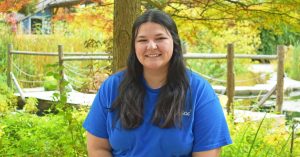
We would like to welcome Riley Hill who recently joined our amazing team at the Saginaw Children’s Zoo, in early September, as the new Animal Nutrition Lead. Riley comes to Michigan from Illinois, as she moved here from her previous home late this past summer.
We are thrilled to have her on the team and would like to welcome her to the Zoo and celebrate National Vet Tech week we thought we would introduce her to you.
Q & A With Riley
Q: What are your favorite hobbies and interests? A: I love reading, watching crime documentaries, and baking.
Q: Where did you go to school? A: I went to school at University Wisconsin Platteville and got a Bachelor of Science in Biology emphasis in zoology. Throughout my time in school, I completed internships that gave me experience in both animal keeping and animal nutrition, including leadership responsibilities.
Q: What was it like moving to Michigan and starting a job in a new state? A: It was definitely a big change, but I was also excited to start a new chapter in my life and experience something new!
Q: What made you want to work in Animal Nutrition and with Animals in general? A: Nutrition plays such an important role in an animal’s health and well-being, so being able to help prepare their diets every day is very rewarding to me. I love knowing that I get to play a part in keeping the animals healthy and thriving.
Q: Favorite part about your job? A: My favorite part of the job is the team that I get to work with. Everyone has been so welcoming and nice, and it really made the transition so easy.
Q: Most difficult part of your job? A: Time management, it is important that we are here every day to make the diets for the animals while making sure we have time in our day to do our other responsibilities like going shopping, inventories, restocking, cleaning and more.
Q: Favorite part about Michigan so far? A: My favorite part of being in Michigan so far is having a change of scenery and getting to know the area, especially now with the fall coming and seeing all the colors come out.
Q: Process of putting together diets and quality of food you look for? A: We start by preparing the diets for the animals that receive produce. We look for fresh, high-quality produce and follow the rule that we wouldn’t feed the animals anything that we wouldn’t consider good enough to eat ourselves. At the end of the day, we prepare the fish and meat diets. We check the fish for freezer burn and inspect the meat and whole prey to make sure everything is safe and acceptable to feed to the animals.
Q: Do you have a favorite animal species to make diets for? A: My favorite animal species diet to make would have to be the Capuchin.
Q: Animal with the toughest diet to prep? A: The toughest diet to prep would have to be our barred owl, Hoot.
Please join us in welcoming Riley, not only to the Saginaw Children’s Zoo, but to Michigan and the Great Lakes Bay Community!
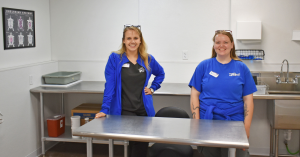
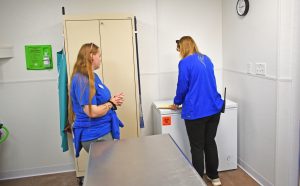
Dr. Fiske and Vet Tech Christiana in the new Zoo Necropsy room.
What do you think of when you think of the Saginaw Children’s Zoo? Most likely it’s the charismatic animals, our lush gardens, digging in the sand at the Fossil Find, or climbing on the playscape in the playground.
However, behind the main sights and sounds at the Zoo, there is unique science and research being done. From conservation studies, to animal behavior research, and so much more, the Zoo is full of pursuits to learn more about the world around us and how we can better protect it.
Recently, a very important addition was made at Zoo, to further our scientific research efforts in the field of veterinary medicine and science in our new Necropsy room.
What is Necropsy?
Similar to when a human would get an autopsy, animals also receive an exam after they have died, and this is called a necropsy. This in an important tool to help people, such as veterinarians, understand an animal’s health and determine cause of death but may also uncover underlying disease processes or injuries, and gather helpful information on how we can care for animals better in the future.
Each necropsy tells a story. Typically, it confirms what veterinarians already have suspected, though sometimes it reveals things that help further care, including improvement to medical care, nutrition, habitat design, and husbandry practice. Furthermore, sometimes findings in necropsy can contribute to scientific advancement and research. Even in animal death, we can still use that data to contribute to science, conservation of the species, and the well-being of other animals at the Zoo.
“Sometimes we discover a disease that was previously not an issue in a species but comes up on a necropsy,” Zoo Veterinarian Dr. Fiske said. “In those scenarios, we can take that knowledge back to our Animal Care team and work together to consider ways to mitigate that issue in the future!”
Necropsy at the Zoo
Previously, to perform a necropsy at the zoo, we would coordinate with outside services, such as Michigan State University (MSU). Now having a dedicated necropsy space within our Zoo will allow the veterinary team to perform these necropsies in-house! Giving us the opportunity to further study and provide our animal care staff first-hand education of exotic animal anatomy and physiology.
“I really hope to gain more knowledge of internal processes that happen before, during, and after the death of a patient,” said Zoo Veterinary Technician Christiana Waters. “Finding these answers and being able to correlate details with previous patient necropsies will allow us to have a better understanding of prevention methods and treatment options for the other animals here.”
Learning this knowledge that a necropsy room can provide, firsthand, will greatly benefit the zoo in the way that the vet team can apply this specific information to other medical future cases. Providing the zoo with another tool to provide the highest standard of animal care, so we have a space to learn, be better prepared to care for every animal living at the Zoo and participate in scientific advancement in the animal and veterinary medicine world.
One thing that is very exciting is our ability now to better collaborate with MSU. Our vet staff can perform a general necropsy and collect samples, and then, as necessary, send off samples to MSU’s Veterinary Pathologist for more advanced testing. Allowing us to uncover more about our deceased patients.
“Because we are a smaller zoo, I think that performing necropsies in house will help the zookeepers understand how some disease processes happen so they can better care for the animals in their sections,” stated Waters
Building the Necropsy Room
Like the beginning stages of any animal-related buildings/rooms, a lot of care and details need to go into the planning of the facility and how it relates to the goal of the space. Designed carefully with safety, cleanliness, accessibility, and biosecurity in mind, with consideration of the long-term goals of the space, the necropsy room was built in a spot isolated from our animals and was a retrofitted portion of a space already on grounds rather than completely new construction.
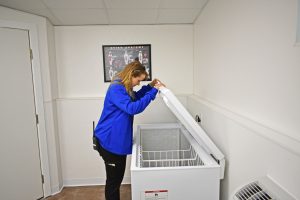
The space contains specialized equipment that allows staff to handle animals of all sizes, ventilation, drainage, and storage, all of which are imperative for maintaining the controlled environment and reducing the risk of spreading disease. It was also built with the future in mind, having the space to add in more tabletop pathology laboratory equipment and diagnostics as time goes on, and the potential use of the space for educational programs!
Animal Care in Every Stage of Life
This new necropsy room represents our commitment to animal welfare, science, continuous learning, and contribution to scientific/vet med research. Sometimes the work that goes unnoticed can be some of the most impactful, and the loss of an animal can help well into the future.
“I personally hope to gain an active learning space,” says Dr. Fiske. “Where we can build upon our knowledge of how we care for the animals in the Zoo. Including if there are ways we could improve their protection from infectious diseases, and/or improve aspects of their nutrition or husbandry, and of course consider if there are ways to improve their overall welfare/wellbeing.”
“This is a huge development for our little Zoo!” stated Waters. “I think there is a lot to be learned from being able to care for an animal when they arrive at the Zoo all the way until the end. There is so much to learn in the veterinary field in general, and any steps that the Saginaw Children’s Zoo can take to help provide more knowledge and information is a great thing.”
Behind every healthy animal, and conservation effort, there is a team at the Zoo committed to learning, which sometimes can begin after an animal’s life has ended. While this room is not the most glamorous addition or may not be something that guests are normally able to view, it is one whose impact will reach every corner of the Zoo.
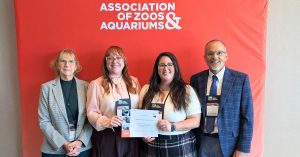
Silver Spring, Md. (September 29, 2026) – The Association of Zoos and Aquariums (AZA) has announced that the Saginaw Children’s Zoo was granted accreditation by AZA’s independent Accreditation Commission. Following a comprehensive evaluation, the Accreditation Commission determined that the facility meets AZA’s standards for animal wellbeing, care and management.
“Congratulations to the leadership and staff at the Saginaw Children’s Zoo for attaining the global gold standard in zoological and aquarium accreditation,” said Dan Ashe, president and CEO of the Association of Zoos and Aquariums. “AZA’s standards continuously evolve to reflect best practices in the zoo and aquarium profession, with a strong emphasis on animal care and wellbeing at their core. The Saginaw Children’s Zoo has demonstrated a dedication to this exceptional level of care.”
AZA accreditation includes a detailed application and a meticulous multiple-day on-site inspection by an independent team of zoological professionals. The inspecting team analyzes all aspects of the facility’s operation, including animal care and wellbeing; veterinary care; staff training; educational programs; conservation efforts; financial stability; risk management; governance; and guest services. Detailed reports from the inspection team and the facility alike are then thoroughly evaluated by the Accreditation Commission. Finally, the Commission interviews top officials from the facility at a formal hearing, after which accreditation is fully granted, provisionally granted for one year, or denied.
A thorough review ensures that each facility has met and will continue to meet ever-rising standards. As a condition of Association membership, AZA facilities must complete this rigorous accreditation process every five years.
“We are incredibly proud to earn AZA accreditation and have the work of our entire team recognized through this rigorous process,” said Nancy Parker, Executive Director and President of the Saginaw Children’s Zoo. “Accreditation is much more than a designation—it reflects our commitment to providing exceptional care for the animals entrusted to us, meaningful experiences for children and families, and responsible stewardship of our Zoo. I am especially proud of our staff and management team, whose knowledge, dedication, and hard work made this achievement possible. We are honored to continue building on this standard of excellence for our community and for the future of the Saginaw Children’s Zoo.”
After this Fall 2026 AZA accreditation cycle, there are 241 AZA-accredited institutions and 14 AZA-accredited related facility members in 12 countries. For a complete list of accredited AZA facilities, please visit https://www.aza.org/current-accreditation-list.
About AZA
Founded in 1924, the Association of Zoos and Aquariums is a nonprofit organization dedicated to the advancement of zoos and aquariums in the areas of conservation, animal welfare, education, science, and recreation. AZA is setting the global gold standard, accrediting 255 of the top zoos, aquariums, and related facilities in 12 countries. Look for the AZA accreditation logo whenever you visit a zoo or aquarium as your assurance that you are supporting a facility dedicated to providing excellent care for animals, a wonderful experience for you, and a better future for all living things. The AZA is a leader in saving species and your link to helping animals all over the world. To learn more, visit www.aza.org.
Saginaw, MI — Friday, April 18, 2025 — The Saginaw Children’s Zoo is thrilled to welcome visitors back for another season of wild family fun! Opening Day, April 25, is set to be full of fresh faces, heartwarming stories, and new experiences, all designed to make 2025 the Zoo’s most exciting year yet.
New Animal Arrivals
One of the season’s biggest stars is Elton, a two-toed sloth who’s ready to hang out in his new home and charm guests with his slow-and-steady lifestyle. Elton joins the Zoo as part of its continued mission to provide engaging and educational animal experiences.
Also debuting this season is Aiden Cluckinson, a very special turkey who was officially pardoned by Governor Gretchen Whitmer during the 2024 Thanksgiving season. Aiden now calls the Zoo home in the beautifully updated area now known as “Gobble and Quack: The Fowl Shack”, where she shares space with a lively flock of chickens and ducks.
The Zoo is also proud to announce the public debut of two baby boy penguins, affectionately named Eggs Benedict and Quiche. These adorable additions to the penguin colony are ready to waddle their way into guests’ hearts and highlight the Zoo’s support in avian conservation and breeding efforts.
New Additions
Guests will also notice important accessibility upgrades, including ADA accessible enhancements to the beloved Carousel, making this classic ride more inclusive for all visitors.
In addition, the Zoo Train tunnel has been transformed into a colorful, creative experience using repurposed materials with hand-painted art by a talented Zoo staff member—showcasing our commitment to sustainability and community talent.
Looking ahead, the Zoo is set to break ground this spring on Phase 2 of its capital project, which will feature an indoor habitat for reptiles, birds, and bugs. This exciting new space will enhance educational opportunities and provide year-round access to some of the Zoo’s smallest and most fascinating residents.
“We’re so excited to share all of these updates with our community,” said Nancy Parker, Zoo Director at the Saginaw Children’s Zoo. “From new animals to major improvements and future projects, everything we do is designed to inspire curiosity, learning, and connection with wildlife.”
The Saginaw Children’s Zoo is open daily starting April 25, from 10am- 5pm. For more information on tickets, memberships, and upcoming events, visit www.saginawzoo.com or follow us on social media @SaginawZoo.
About the Saginaw Children’s Zoo
The Saginaw Children’s Zoo is a cherished destination for families, offering engaging animal encounters, educational programs, and interactive exhibits. As a 501c3 nonprofit, the Zoo is dedicated to connecting the community with wildlife and inspiring a passion for conservation. For more information, visit saginawzoo.com, or visit us on Facebook and Instagram.
Media Contact: Aimee Conversa
Manager of Development and Marketing
Saginaw Children’s Zoo
(989) 759-1408 ex 119 aimee@saginawzoo.com
Saginaw, MI — March 11, 2025 — The Saginaw Children’s Zoo is thrilled to announce the hatching of two critically endangered African Penguin chicks! Born to parents Blake and Melody shortly before Christmas, these two male chicks mark an exciting milestone for the Zoo’s penguin colony.
The Saginaw Children’s Zoo is proud to be an accredited member of the Association of Zoos and Aquariums (AZA). Through the AZA’s Species Survival Plan (SSP) for African Penguins, the Zoo plays a vital role in ensuring the survival of this critically endangered species. The SSP focuses on cooperative breeding programs, habitat protection, and public education to address the threats these penguins face in the wild.
“We’re overjoyed to welcome these two chicks to our Zoo family,” said Nancy Parker, Saginaw Children’s Zoo Director. “Blake and Melody are first-time, exemplary parents, and it’s heartwarming to see them so devoted to their little ones. The African Penguin population is rapidly declining in the wild, making these chicks a vital part of global conservation efforts. They help raise
awareness about the challenges the species faces and inspire action to protect them.”
While the chicks are not yet ready for public viewing, the Zoo invites guests to stay tuned for updates on their growth and development. The Zoo is also hosting a community naming contest for the new chicks. Starting today, the public can vote for their favorite names on the Zoo’s website. This is an opportunity for the community to engage with these special additions to the Zoo family while learning more about the conservation efforts needed to protect African Penguins in the wild.
The Saginaw Children’s Zoo officially opens for the season on Friday, April 25! We can’t wait to welcome guests back for another exciting year of wildlife experiences, conservation education, and family fun.
About the Saginaw Children’s Zoo
The Saginaw Children’s Zoo is a cherished destination for families, offering engaging animal encounters, educational programs, and interactive exhibits. As a 501c3 nonprofit, the Zoo is dedicated to connecting the community with wildlife and inspiring a passion for conservation. For more information, visit saginawzoo.com, or visit us on Facebook and Instagram.
Media Contact: Aimee Conversa
Manager of Development and Marketing
Saginaw Children’s Zoo
(989) 759-1408 ex 119 aimee@saginawzoo.com
If you’ve been to our little Zoo, you are probably well aware of our beautiful centerpiece – the pond! It has been transformed quite a bit over the years, and some may even remember the ark and the whale that used to call the pond their home, which were both installed in 1969.
The Ark – which displayed small animals (1996)
Jonah and the Whale, with an aquarium inside. This exhibit was crushed by a tree when a tornado hit the Zoo in 1982.
At the heart of the Saginaw Children’s Zoo is our dedicated community of volunteers. They connect us to our community and are a crucial part of our existence. We know that this year has proven difficult for just about every aspect of what makes our Zoo whole, and we miss our volunteers dearly. Did you know that our volunteers give over 14,000 hours of their time to us annually?
Although we are doing the best we can as we persevere during these unprecedented times, we miss our smiling volunteers and that special something that they bring to the Zoo. We know they miss being here and we miss them, too.
With that being said, we are kicking things into high gear with plans for our Volunteer Program for next year.
Volunteer Coordinator
We would like to introduce the newest addition to the Saginaw Children’s Zoo Team, Volunteer Coordinator, Kathy McCarthy.
We would like to welcome Dr. Shannon Cerveny DVM, Dipl ACZM to our wonderful Zoo! Dr. Cerveny joined our team as our full-time Veterinarian in January of this year. The staff and animals are delighted to have her and would like to introduce you!
Gobbles, hatched November 25, 2019, is the newest arrival at the Saginaw Children’s Zoo.
As most of you know, The Saginaw Zoo made history last year with the successful hatching of our first ever endangered African penguin, Amahle.
We are very pleased to announce that we successfully hatched our second African penguin chick just two days before Thanksgiving this year. Dad (Robben) and mom (Petey) are taking very good care of our new arrival, festively named “Gobbles.” After DNA testing, it was determined that Gobbles is a GIRL! And she has been living up to her name and eating very well and growing very quickly. Continue reading →
It’s the beginning of November, and that means we have just completed our annual crane survey! Every year around this time, we partner with the USFWS to conduct a survey on the beautiful Shiawassee National Wildlife Refuge. This survey provides an estimate of the size and trend of the Sandhill Crane population in the area. Before the actual survey, it’s my job to scout out exactly what parts of the refuge the cranes are using for resting, foraging and roosting during their migration south.
Looking west toward swampy roosting areas the cranes like to rest at on the Refuge just before sunset.