
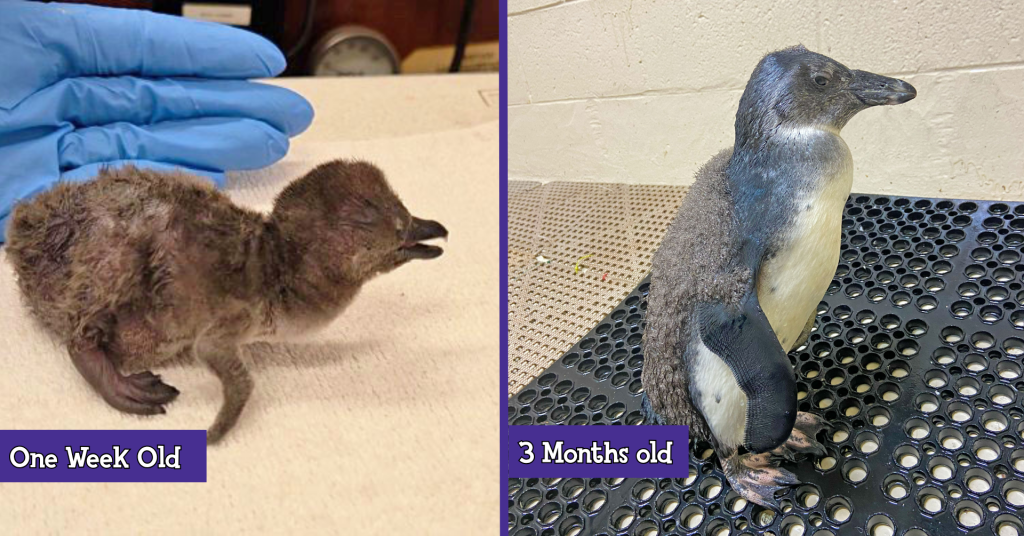
African penguins, are a critically endangered species, with their numbers in the wild dropping due to habitat loss, overfishing, climate change, and water pollution. Over the last century their numbers in the wild have fallen by 97%, and if trends continue, they could become extinct in the wild within ten years.
Conservation efforts from AZA zoos and aquariums, such as ours, in Species Survival Plans (SSP) and Saving Animals From Extinction (SAFE), and organizations like SANCCOB are hard at work to ensure the survival of this adorable species. As the future for African penguins looks scary, there is hope in every new chick born at an AZA zoo through these programs.
A little over three months ago, an African penguin chick hatched right here at the Saginaw Children’s Zoo, named Butters by our wonderful community, and an offspring to Robben (male) and Petey (female), a pair chosen through the African Penguin SSP. What first began as a journey filled with uncertainty, now turns to one of a thriving African penguin chick.
A Shaky Start
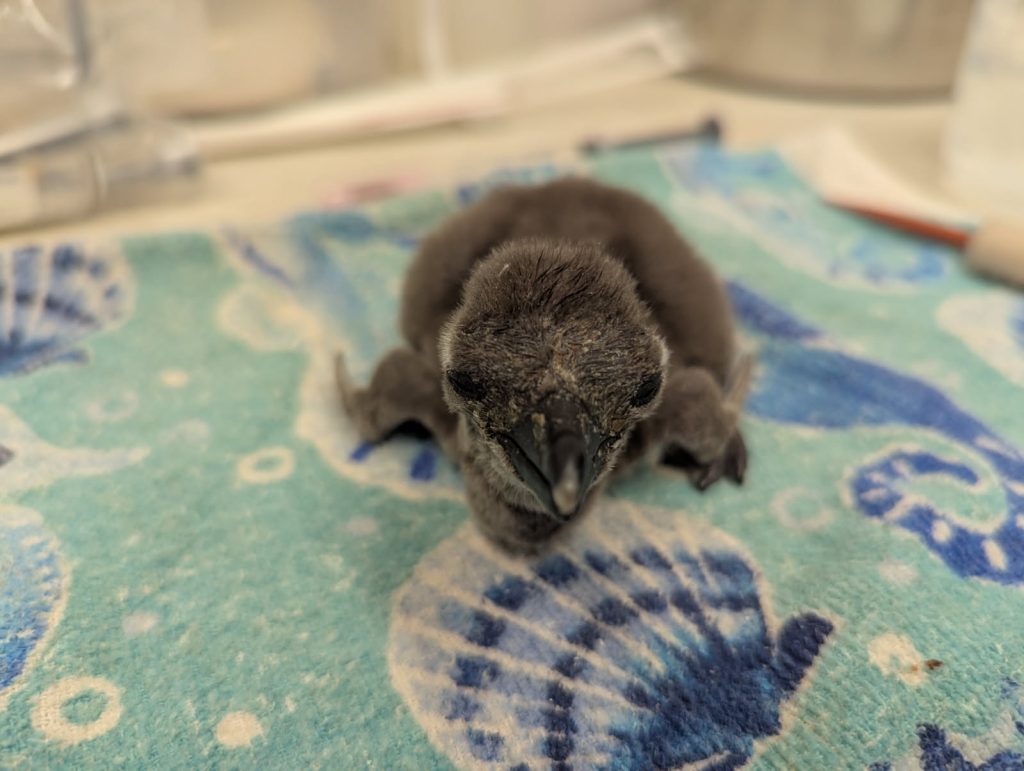
When Butters finally pipped (poked a hole in his eggshell), the animal care team was able to hear his first sounds, and they quickly noticed something was wrong. African penguins are supposed to pip where their air cell is in the egg, but Butters did not do this. As the keepers got to work helping aid the chick on its journey out of its shell, urgency struck when they noticed that Butters was positioned in his egg in a way that is considered usually “lethal”. In fact, if this occurred in the wild away from human care, there is a big chance that Butters would not have been able to hatch on his own.
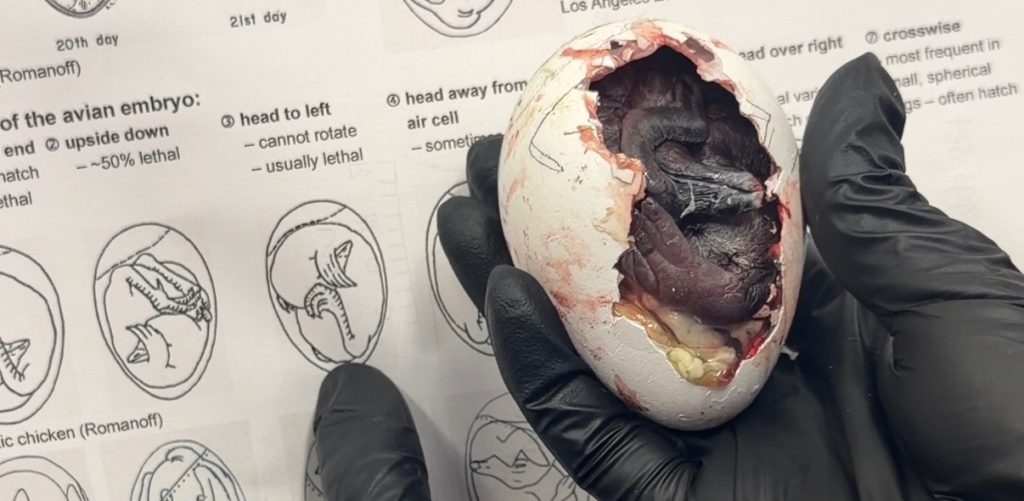
Thanks to our incredible animal care team and Zoo eggs-perts, Lead Keepers Ashley Sterling and Brook Goulet, the little guy was able to successfully hatch from his egg with the help of our team. This was just the first big obstacle, however, that our new animal buddy had to overcome.
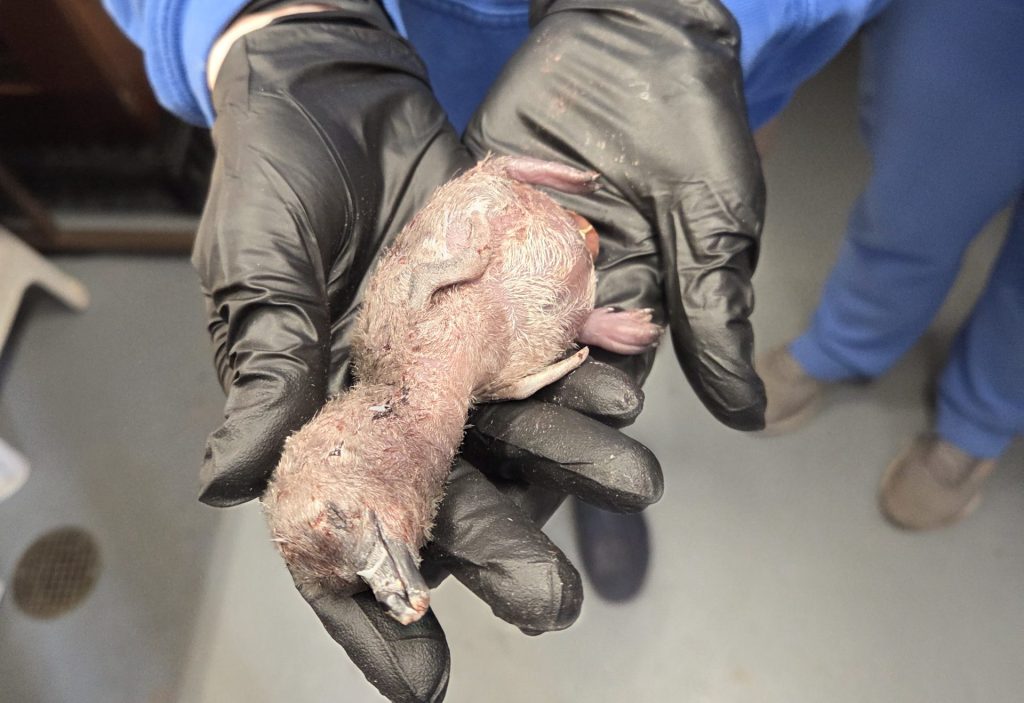
Being that Butters hatched a few days early, he was found to still have his yolk sac attached to him. Typically, with African Penguins, the yolk sac is absorbed through their umbilicus, a penguin’s version of a belly button, and the umbilicus seals up in the final days of incubation. However, since Butter hatched prematurely, his yolk sac was still present and attached to his umbilicus, leaving it open and exposed to the environment.
In order to decrease his risk of infection to this exposed umbilicus, the decision was made to keep Butters in the care of the Zoo’s Vet and Animal Care staff until this resolved. During this time away, the parents were provided with a dummy egg until Butters could be delivered back to them.
Now the work began to help little Butters recover, and each day was a small victory on his journey.
Caring For Butters
As previously mentioned, to reduce the chance of infection for Butter’s umbilicus until it closed, he was kept in the care of our Animal Care and Vet staff – which included frequent daily feedings!
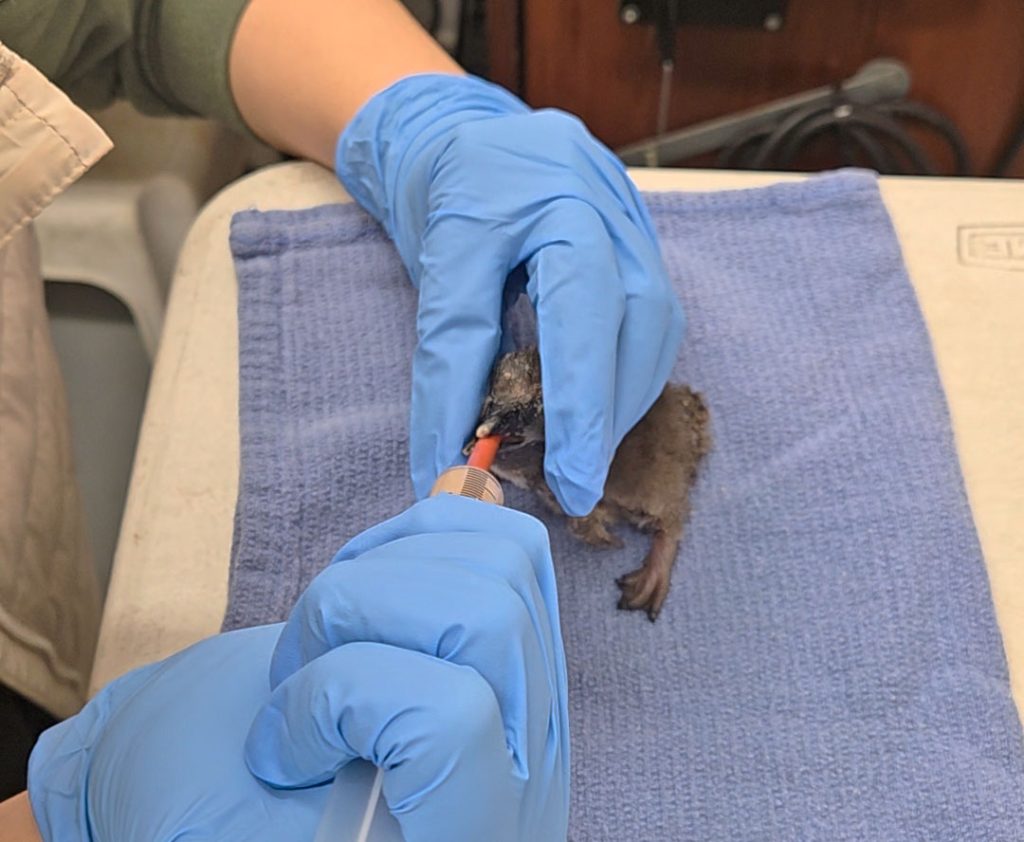
Under the guidance of Dr. Fiske, our animal care team learned how to feed Butters a meal of blended fish, vitamins, and supplements by using a syringe and tubing. The tubing was carefully placed in his mouth and then delivered to him using the syringe. This feeding took place around the clock, every three hours from 6:00am to 9:00pm and included weight checks to ensure he was gaining weight with each feeding as well as umbilicus checks to ensure it was closing properly.
After around a week of hand feeding, Butters’ umbilicus had successfully closed, and he was able to be delivered back to Mom and Dad.
Return to the Family
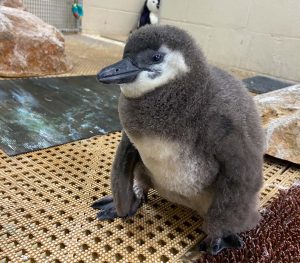
After around a week of human care feeding, Butters successfully recovered from his premature hatching, he was returned back to his parents, Petey and Robben who took him in right away. The care and feeding for Butters now laid in the hand of his parents. The care and feeding for Butters now laid in the hand of his parents.
Regular check ins, weigh in, and treatments to ensure his umbilicus stay closed and clear from infection occurred from our animal care team. During these check-ins, Butters continued to gain weight, an excellent sign that meant his parents were feeding and taking proper care of him.
A little over three months later, Butters is now a thriving African penguin chick! He is as tall and as heavy as some of our adult penguins in the colony here at the Zoo and is beginning to molt his downy feathers. Downy feathers are a fluffy grey coat of feather African penguin chicks heave to provide insulation and keep them warm, unfortunately though, these feathers are not waterproof preventing Butters from doing any swimming.
That being said, Butters’ next big milestone is the complete molt of his downy feathers. Once he does that, he can begin swim school in the small pool in the indoor penguin habitat, before eventually being moved to the main, outdoor penguin pool.
A Big Difference
Butters still has a long road ahead in his first year, and for African penguins, the first year is a crucial one. Each day is a huge victory and step in Butters’ journey, and as big and special of a deal as it is for our Zoo, it is also for the world.
As mentioned earlier, the African penguin species is in trouble as their numbers continue to drop in the wild due to due to habitat loss, overfishing, climate change, and water pollution, and their future looks evermore dire. Here at the Zoo we are one of many AZA accredited zoos taking part in the African Penguin SSP. This program is here to help promote and support conservation of the species, maintain a sustainable and biodiverse population of the species, and promote AZA’s SAFE program.
Each African penguin chick hatched makes a world of difference to their conservation. To be a small Zoo and have this impact is beyond incredible, and we are honored to take part in the conservation of this beautiful species. There is a very good chance that if Butters was born in the wild he would not have made it, but thanks to the courageous work by our animal care team, Butters was able to hatch from his egg, be nursed back to health, reunited with his parents, and put on the road to thriving.
Butters is a little miracle for us here at the Zoo and for the African penguin species as a whole, and each chick born, makes all the difference for this species. It serves as a reminder of how precious life is, no matter how small, and that the tiniest of things can have the most profound impacts.
To learn more about African penguins and steps you can take to help the conservation of this species visit: https://www.saginawzoo.com/african-penguin/