
What do you think of when you think of the Saginaw Children’s Zoo? Most likely it’s the charismatic animals, our lush gardens, digging in the sand at the Fossil Find, or climbing on the playscape in the playground.
However, behind the main sights and sounds at the Zoo, there is unique science and research being done. From conservation studies, to animal behavior research, and so much more, the Zoo is full of pursuits to learn more about the world around us and how we can better protect it.
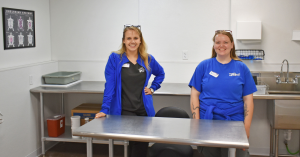
Recently, a very important addition was made at Zoo, to further our scientific research efforts in the field of veterinary medicine and science in our new Necropsy room.
What is Necropsy?
Similar to when a human would get an autopsy, animals also receive an exam after they have died, and this is called a necropsy. This in an important tool to help people, such as veterinarians, understand an animal’s health and determine cause of death but may also uncover underlying disease processes or injuries, and gather helpful information on how we can care for animals better in the future.
Each necropsy tells a story. Typically, it confirms what veterinarians already have suspected, though sometimes it reveals things that help further care, including improvement to medical care, nutrition, habitat design, and husbandry practice. Furthermore, sometimes findings in necropsy can contribute to scientific advancement and research. Even in animal death, we can still use that data to contribute to science, conservation of the species, and the well-being of other animals at the Zoo.
“Sometimes we discover a disease that was previously not an issue in a species but comes up on a necropsy,” Zoo Veterinarian Dr. Fiske said. “In those scenarios, we can take that knowledge back to our Animal Care team and work together to consider ways to mitigate that issue in the future!”
Necropsy at the Zoo
Previously, to perform a necropsy at the zoo, we would coordinate with outside services, such as Michigan State University (MSU). Now having a dedicated necropsy space within our Zoo will allow the veterinary team to perform these necropsies in-house! Giving us the opportunity to further study and provide our animal care staff first-hand education of exotic animal anatomy and physiology.
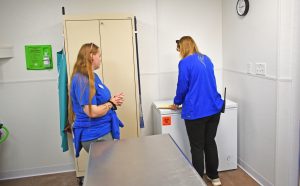
“I really hope to gain more knowledge of internal processes that happen before, during, and after the death of a patient,” said Zoo Veterinary Technician Christiana Waters. “Finding these answers and being able to correlate details with previous patient necropsies will allow us to have a better understanding of prevention methods and treatment options for the other animals here.”
Learning this knowledge that a necropsy room can provide, firsthand, will greatly benefit the zoo in the way that the vet team can apply this specific information to other medical future cases. Providing the zoo with another tool to provide the highest standard of animal care, so we have a space to learn, be better prepared to care for every animal living at the Zoo and participate in scientific advancement in the animal and veterinary medicine world.
One thing that is very exciting is our ability now to better collaborate with MSU. Our vet staff can perform a general necropsy and collect samples, and then, as necessary, send off samples to MSU’s Veterinary Pathologist for more advanced testing. Allowing us to uncover more about our deceased patients.
“Because we are a smaller zoo, I think that performing necropsies in house will help the zookeepers understand how some disease processes happen so they can better care for the animals in their sections,” stated Waters
Building the Necropsy Room
Like the beginning stages of any animal-related buildings/rooms, a lot of care and details need to go into the planning of the facility and how it relates to the goal of the space. Designed carefully with safety, cleanliness, accessibility, and biosecurity in mind, with consideration of the long-term goals of the space, the necropsy room was built in a spot isolated from our animals and was a retrofitted portion of a space already on grounds rather than completely new construction.
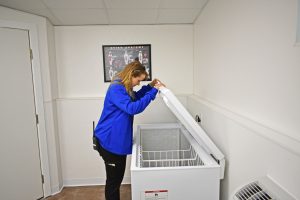
The space contains specialized equipment that allows staff to handle animals of all sizes, ventilation, drainage, and storage, all of which are imperative for maintaining the controlled environment and reducing the risk of spreading disease. It was also built with the future in mind, having the space to add in more tabletop pathology laboratory equipment and diagnostics as time goes on, and the potential use of the space for educational programs!
Animal Care in Every Stage of Life
This new necropsy room represents our commitment to animal welfare, science, continuous learning, and contribution to scientific/vet med research. Sometimes the work that goes unnoticed can be some of the most impactful, and the loss of an animal can help well into the future.
“I personally hope to gain an active learning space,” says Dr. Fiske. “Where we can build upon our knowledge of how we care for the animals in the Zoo. Including if there are ways we could improve their protection from infectious diseases, and/or improve aspects of their nutrition or husbandry, and of course consider if there are ways to improve their overall welfare/wellbeing.”
“This is a huge development for our little Zoo!” stated Waters. “I think there is a lot to be learned from being able to care for an animal when they arrive at the Zoo all the way until the end. There is so much to learn in the veterinary field in general, and any steps that the Saginaw Children’s Zoo can take to help provide more knowledge and information is a great thing.”
Behind every healthy animal, and conservation effort, there is a team at the Zoo committed to learning, which sometimes can begin after an animal’s life has ended. While this room is not the most glamorous addition or may not be something that guests are normally able to view, it is one whose impact will reach every corner of the Zoo.