
Canis lupus baileyi | Mexican Gray Wolf
Names: Kizzie & Sydney (female)

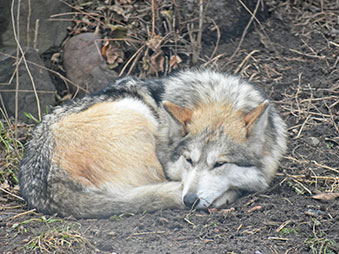
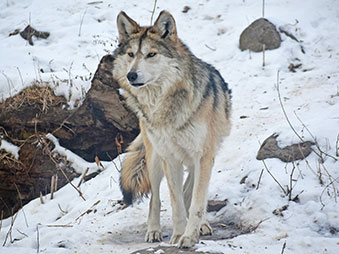
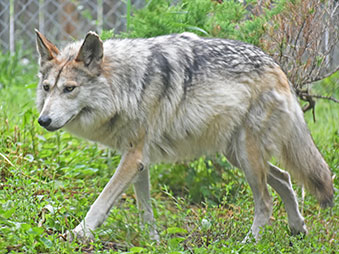
Meet Kizzie & Sydney
Known as El lobo, the Mexican wolf is the smallest, rarest, and most genetically distinct subspecies of the grey wolf. Once on the brink of extinction, these resilient animals are now making a slow but steady comeback, thanks to the work of conservationists, government agencies, and AZA-accredited zoos and aquariums like ours.
You can meet our resident wolves, Kizzie and Sydney, right here at the Zoo. Though they were born under human care, they serve as powerful ambassadors for a species that is howling its way back from the edge.
A Wolf Apart
Mexican wolves are smaller than their northern cousins, typically weighing between 50 and 80 pounds. With coats of gray, light brown, and cream, they blend beautifully into the rocky canyons, pine forests, and desert scrublands of the American Southwest.
Like all wolves, they live in tight-knit family units and rely on strong social bonds to hunt, raise young, and survive. In the wild, they feed on:
- Deer
- Javelinas (wild pigs)
- Rabbits
- Rodents
- Elk
At the zoo, we mimic this natural diet with exotic canine chow and whole prey items, while strictly following the guidelines of their Saving Animals From Exticntion (SAFE) plan.
Not Your Average Zoo Wolves
Kizzie and Sydney are part of the Mexican Wolf SAFE, a collaborative recovery program led by the U.S. Fish and Wildlife Service in partnership with AZA institutions and government agencies in both the U.S. and Mexico—including SEMARNAT (Secretaría de Medio Ambiente y Recursos Naturales), Mexico’s national environmental authority.
Our zoo serves as a non-breeding, holding facility within this program. That means Kizzie and Sydney are not currently part of active breeding efforts, but they may still support future pack members—by providing social structure, helping raise pups, or preparing for possible reintroduction to the wild.
To preserve their wild instincts, we follow strict, SAFE-approved guidelines:
- No domestic food sources—they’re never fed products made from farm animals.
- No man-made toys or dog items—enrichment must mimic wild experiences.
- Minimal human interaction—we maintain a neutral or even negative relationship.
- Naturalistic care—quiet habitats, animal scents, logs, bones, and foraging challenges.
Every aspect of their care is designed to prepare them—or future packmates—for life beyond zoo walls.
Fact Sheet
Taxonomy
Genus: Canis | Species: lupus | Subspecies: baileyi |
Kingdom: Animalia | Phylum: Chordata | Class: Mammalia | Order: Carnivora | Family: Canidae |
Size
- Height: 28 to 32 inches (71 to 81 centimeters) tall at shoulder
- Length: 54 to 66 inches (137 to 167 centimeters) from nose to tip of tail
- Weight: 50 to 80 pounds (22 to 36 Kilograms)
Life Span
- In the Wild: 6 to 8 years
- In Human Care: Up to 15 years
Diet
- In the Wild: Elk, deer, javelinas, rabbits, and small rodents
- At the Zoo: Exotic canine chow and whole prey items
Active
Crepuscular (dawn and dusk)
Geographic Range
Only in southeastern Arizona, southwestern New Mexico, and northern Mexico
Habitat
Mountain forests, grasslands, and scrublands of southeastern Arizona and southwestern New Mexico.
Status: Endangered
Conservation: From Extinction to Recovery
Mexican wolves once roamed widely across the southwestern U.S. and northern Mexico. But by the mid-20th century, widespread hunting, habitat loss, and government eradication campaigns had nearly wiped them out. By the 1970s, just seven wolves remained.
Thanks to a binational recovery effort, these animals were rescued from the edge of extinction. Coordinated breeding programs, habitat protection, and carefully managed reintroductions have brought their numbers to:
- ~200 wolves in the wild (Arizona, New Mexico, and small parts of Mexico).
- 300+ wolves in managed care at zoos and conservation centers.
Agencies like SEMARNAT and the U.S. Fish and Wildlife Service, working alongside zoos, aquariums, and wildlife partners, continue to expand protected areas, monitor populations, and promote public education to ensure El lobo’s future.
Why Wolves Matter
Saving the Mexican wolf isn’t just about rescuing one species—it’s about restoring balance to entire ecosystems. Wolves are keystone predators, meaning they help regulate prey populations and promote biodiversity. Their presence supports:
- Forest and plant regeneration
- Healthier deer and elk populations
- Stronger, more resilient habitats
However, their recovery is still delicate. Ongoing challenges include habitat fragmentation, illegal killings, and public misconceptions about wolves.
How You Can Help
- Support habitat conservation—wolves need wild spaces to thrive/
- Donate to organizations like the Mexican Wolf SAFE and the U.S. Fish and Wildlife Service .
- Share the truth about wolves and their essential role in nature.
- Visit AZA-accredited zoos and aquariums—your support helps fund recovery programs.
- Advocate for science-based wildlife policies and protections.
How to Find Us
Kizzy and Sydney can be found in the rear of the Forgotten Forest, where they can be viewed from inside the log cabin or from the open-air patio. Have a howling good time watching these magnificent, endangered wolves frolic, slumber, and interact with one another!