
Dendrobatidae Family | Poison Dart Frog, Poison Arrow Frog

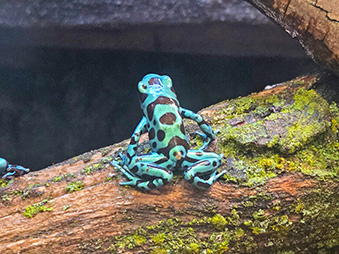
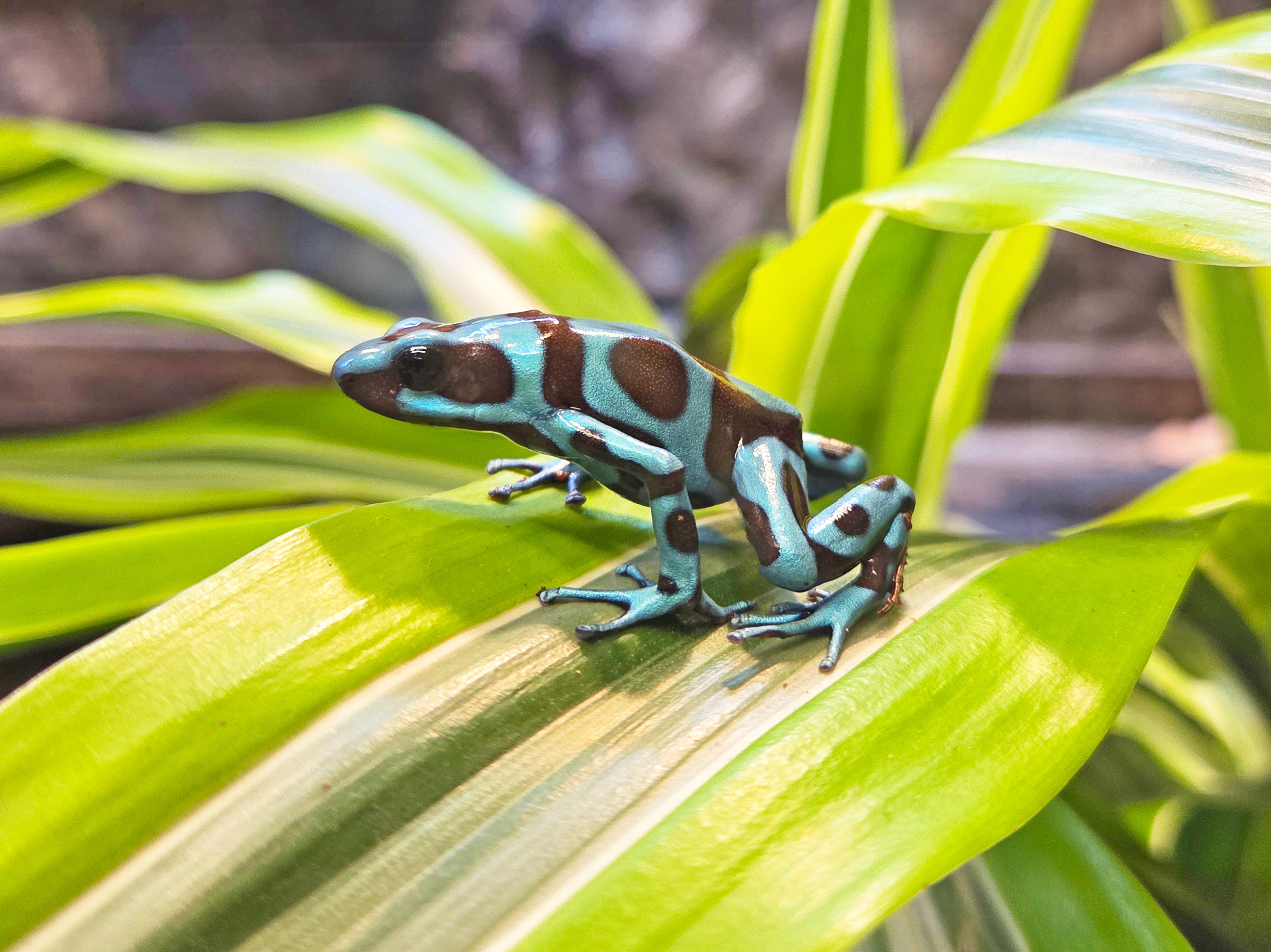
Meet the Poison Dart Frogs
Step into a tropical rainforest and you might spot a jewel hopping across the leaf litter. Poison dart frogs may be small enough to perch on a paperclip, but they are among the rainforest’s most eye-catching, and scientifically impressive, residents.
Found in the warm, humid forests of Central and South America, from Nicaragua to Peru and Brazil, these amphibians are famous for their brilliant colors and, in some species, powerful skin toxins. Their neon blues, fiery reds, sunny yellows, and glowing greens aren’t just for show, they’re a warning. This bold color strategy, called aposematic coloration, tells predators: “Don’t eat me. I’m toxic.”
Some Indigenous communities in Colombia historically used toxins from certain species, such as Phyllobates terribilis, to coat blowgun darts, earning these frogs their unforgettable name.
Where (and how) to Spot One
Poison dart frogs thrive on the rainforest floor, especially in places that are damp, shaded, and bursting with life. Look for them among wet leaves, mossy logs, dense plants, and near slow-moving streams.
Their survival depends on:
- High humidity
- Stable, warm temperatures
- Plenty of small insects
- Shelter from plants and leaf litter
While most species are tiny, often less than an inch long, some grow to about 2.5 inches. Their size may be modest, but their toxins and vivid colors make a big impression. Not all poison dart frogs are equally poisonous, but caution is always wise in the wild.
You Are What You Eat
Despite their flashy appearance, poison dart frogs dine on minuscule prey. In the wild, they are dietary specialists, feeding mainly on ants and termites.
Scientists believe their toxicity comes from lipophilic alkaloids—chemicals found in the insects they eat. One of the most toxic species, the golden dart frog, produces batrachotoxin, a powerful neurotoxin that disrupts the nervous system and can cause paralysis, convulsions, or death. There is no known antidote.
Interestingly, these same frogs raised in human care eat a different menu (fruit flies, mites, small beetles, and tiny crickets) and as a result, they are not poisonous. This provides strong evidence that their toxins originate from their wild diet, not the frogs themselves.
Cool Behaviors & Family Life
Poison dart frogs are diurnal, meaning they’re active during the day. They use quick, sticky tongues to snap up insects and communicate through distinctive calls that help attract mates, defend territory, or signal danger.
When it’s time to raise a family:
- Females lay eggs on the forest floor.
- A parent (male or female, depending on the species) guards the eggs.
- After hatching, tadpoles hitch a ride on a parent’s back to water-filled plants or puddles.
In the wild, poison dart frogs typically live 4 – 15 years. In human care, some species may live 20 years or more.
Rainforest Health Check: Bioindicators
Poison dart frogs play a vital ecological role:
- They help control insect populations.
- They act as an indicator species, signaling the health of their environment.
Because amphibians live a “double life” on land and in water, reflected in the meaning of their name (amphi = both, bios = life), they are especially sensitive to environmental change. Many amphibians rely on water to lay eggs and even breathe partially through their skin, making them vulnerable to pollution and habitat degradation.
When poison dart frogs disappear from an area, scientists know it’s a warning sign that something is wrong in the ecosystem.
Fact Sheet
Taxonomy
Kingdom: Animalia | Phylum: Chordata | Class: Amphibia | Order: Anura | Family: Dendrobatidae |
Life Span
- In the Wild: 4-15 years old (depending on species)
- In Human Care: 7-20 years old (depending on species)
Diet
- In the Wild: Ants and termites
- At the Zoo: Fresh produce and corn
Geographic Range
Central and South America
Habitat
Tropical rainforests in areas of high humidity and stable temperatures. They can be found on the forest floor and in trees, but prefer leaf litter, rotting logs, and vegetation close to water.
Fun Facts
- There are fewer than 200 species of poison dart frogs.
- The largest genus, Colostethus, is not brightly colored and non-toxic—a dart frog without the “dart”.
- The most toxic genera, Dendrobates and Phyllobates, have lipophilic alkaloids in their skin.
- Some species carry enough toxin to kill a human if ingested.
- Many scientists believe that poison dart frogs get their toxins from diet: they’re ant and mite specialists in the wild.
- In human care, because they eat fruit flies, springtails, bean beetles, and crickets, they lose their toxicity.
- The toxins are released through skin glands spread across their entire body.
- Dart frog calls help scientists tell species apart—each has its own unique “voice”.
- Males use vocal sacs as sound amplifiers.
- Many of their tadpoles are omnivores, eating algae and detritus before they metamorphose.
Status: Least Concern – Critically Endangered
(Dependent on the species)
Conservation Check
There are fewer than 200 species of poison dart frogs worldwide, and their conservation status ranges from Least Concern to Critically Endangered.
Major threats include:
- Habitat loss from deforestation and agriculture
- Pollution and pesticides
- Illegal wildlife trade
- Climate change
Some of the most endangered species, such as the Oxapampa poison frog, sky blue poison dart frog, and Silverstone’s poison frog, exist only in small, fragile regions.
You can help protect amphibians by supporting conservation organizations, participating in citizen science projects like FrogWatch USA, and reducing pesticide and herbicide use at home.
Not a Pet
Poison dart frogs are wild animals and do not make good pets. Amphibians are delicate and require specialized habitats, lighting, diets, and veterinary care. Removing them from the wild harms already fragile populations and fuels illegal wildlife trade. Even captive-bred frogs, though not toxic, still increase demand.
To learn more, explore the Not-a-Pet campaign and discover why these rainforest gems are best admired in the wild!
How to Find Us
Come check out the Poison Dart Frogs in their habitat with our Red-tailed Boa Constrictor, Scarlet, in the Wild In Nature Building!