
Amazona leucocephala | Cuban Amazon Parrot
Name: Pepita (female)
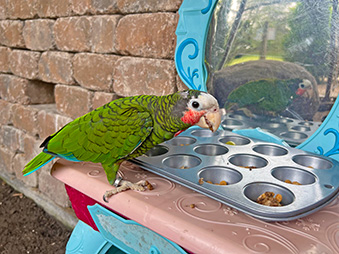
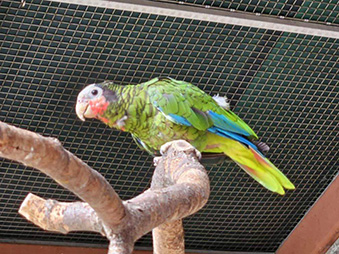
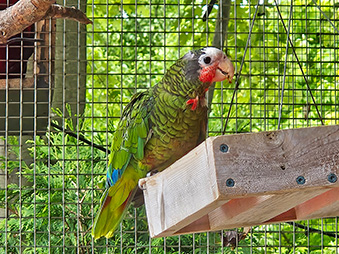
Meet the Cuban Amazon Parrot
Say hello to Pepita, our vibrant and endlessly chatty Cuban Amazon Parrot (Amazona leucocephala)! Native to Cuba and nearby islands—including Isla de la Juventud, the Bahamas, and the Cayman Islands—these parrots are famous for their bold personalities, sharp intelligence, and striking appearance. Their bright green feathers and iconic white forehead make them stand out in any flock.
Life & Behavior: Social, Smart, and Full of Personality
Cuban Amazons are highly social birds. Outside of breeding season, you can find them in flocks of up to 30 individuals, where they often maintain family groups within the larger flock. These family units fly off to forage during the day and regroup at night.
Like many parrots, they’re excellent mimics and love to vocalize—sometimes imitating human speech. They’re also very loud (especially in flight!), with calls often described as harsh and grating. But that voice helps them communicate over long distances.
These parrots are also known for sticking to their home turf. They rarely migrate and prefer to inhabit the same locations year-round, with the exception of the population in the Bahamas.
Reproduction: A Peek into the Nest
Male and female Cuban Amazons look the same – so similar, in fact, that scientists rely on DNA testing to determine sex because there is no sexual dimorphism.
During breeding season, pairs break away from the flock to raise their chicks. While scientific knowledge about the full reproductive cycle is limited, here’s what we do know:
- Nests: Most pairs nest in tree cavities. In the Bahamas, however, the birds rely on limestone cavities—including those in the ground—which unfortunately makes them vulnerable to predators, especially domestic cats.
- Clutch size: 2 to 4 eggs per nest.
- Incubation: 26 to 28 days
- Chicks: Born altricial, meaning featherless, blind, and fully dependent. Their eyes open at about 3 weeks of age.
- Parental Duties: The female incubates the eggs while the male guards the nest and brings food. Once the chicks grow more independent, both parents continue caring for them.
Why Pepita Isn’t a Pet (Even if She’s Charming!)
Pepita is endlessly charismatic, but parrots like her do not make good pets. They require complex enrichment, constant engagement, plenty of space, specialized diets, and experienced veterinary care. Even though this parrot species is small, they can be extraordinarily loud—and without proper mental stimulation, they may become stressed or destructive to themselves and their environment.
Unfortunately, many parrots are surrendered to rescues when owners realize how demanding their care truly is. Worse yet, capturing wild birds for the pet trade harms wild populations. Nest trees are often cut down to collect chicks, removing both individual birds and future nesting sites.
If you want to support parrots responsibly, the best approach is to:
- Support rescues, sanctuaries, and conservation programs.
- Learn why domestic companion animals are the best pets for most people (check out the Not-a-Pet campaign).
Fact Sheet
Taxonomy
Genus: Amazona | Species: leucocephala |
Kingdom: Animalia | Phylum: Chordata | Class: Aves | Order: Psittaciformes | Family: Psittacidae |
Favorite Enrichment Type
She loves to shred paper products and look at herself in mirrors. Her favorite paper products include hanging bags, cardboard tubes, and branches wrapped in craft paper.
Size
- 11 to 13 inches tall
Life Span
- In the Wild: Around 25 to 30 years
- In Human Care: Up to 50 years with proper care
Diet
- In the Wild: Fruits, seeds, nuts, berries, and blossoms
- At the Zoo: A balanced parrot diet including pellets, fresh fruits, vegetables, and enrichment treats
Geographic Range
Native to Cuba and nearby islands, including Isla de la Juventud, the Bahamas – Abaco, Isle of Pine, and the Cayman Islands.
Habitat
Lowland rainforests, mangrove forests, and coastal forests.
Fun Facts
- Twin to Win: Males and females look identical! DNA testing is the safest way to tell them apart.
- Chatty Cathy: Cuban Amazons can mimic human speech—and sometimes entire phrases.
- Stay-at-Home Parrots: They rarely migrate, preferring the comfort of familiar forests.
- Sonic Boom Bird: Their flight calls are loud, sharp, and impossible to miss.
- Cavity Connoisseurs: They’re picky nesters! Most choose tree hollows, but Bahamian parrots nest in limestone cavities!
- Family-Oriented: Even in large flocks, family groups stick together to forage.
- Super Dad: Male parrots stand guard and bring all the meals while mom incubates.
Status: Near Threatened
Conservation Matters
Cuban Amazons are listed as Near Threatened, with some subspecies facing serious pressures. Deforestation, habitat loss, and the illegal pet trade continue to threaten their survival.
For populations that nest in limestone ground cavities—especially in the Bahamas – domestic cats pose a major danger. Cats kill billions of birds annually in the U.S. alone, and island species like the Cuban Amazon are particularly vulnerable because they evolved without such predators.
You can help keep bird populations safe by keeping your cat indoors.
How it helps:
- Protects local wildlife
- Increases the lifespan of pet cats
- Supports healthier ecosystems
To learn more about protecting bird populations at home and globally by keeping your domestic cat inside, visit the American Bird Conservancy!
Conservation efforts taking place including habitat protection, captive breeding, and community education, and are critical for protecting these parrots and the ecosystems they represent. Pepita is a brilliant reminder of the unique biodiversity and why preserving it matters.
How to Find Me
Head on over to the back outdoor habitat of the Rainforest building, directly behind the Cotton-Top Tamarins and Hoffman's Two-toed Sloth!