
Entomyzon cyanotis | Blue-faced honeyeater, Bananabird
Name(s): Hansel, Derek, Baxter, Louis (males)

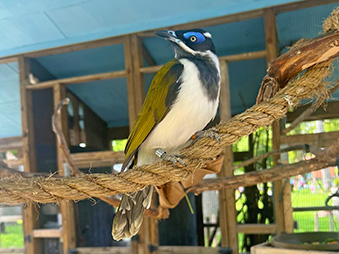
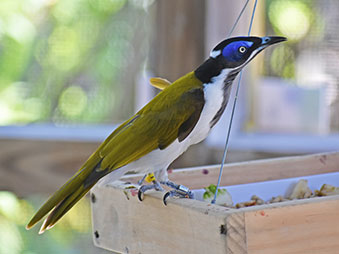
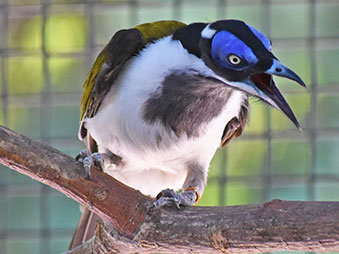
Meet Our Blue-faced Honeyeaters
Say hello to Hansel, Derek, Baxter, and Louis—the feathery stars of the Outback habitat! These vibrant and social birds, also known as blue-faced honeyeaters (Entomyzon cyanotis), bring energy, color, and curiosity wherever they go. Their striking bright blue facial markings, contrasted with sleek black, white, and olive-green feathers, make them a dazzling sight in the aviary.
Social and Spirited Birds
Native to Australia and New Guinea, blue-faced honeyeaters are highly social creatures, often living in family groups of four to ten individuals. These groups include extended family members and offspring of various ages, creating a strong sense of community.
Nicknamed “Bananabirds”, they have a fondness for banana fruit and flowers, alongside their natural diet of nectar, insects, and fruit. Their specially adapted brush-tipped tongues allow them to extract nectar efficiently, making them essential pollinators and seed spreaders in their ecosystems.
Life at the Zoo
In human care, these honeyeaters enjoy a diet of Mazuri® soft-bill food, crickets, mealworms, fresh fruit, and chop (a finely diced mix of nutritious fruits and vegetables). Their energetic nature keeps them active, and they love to interact with their environment—including one of their favorite pastimes: looking at themselves in mirrors!
Whether they’re singing melodious tunes, darting between trees, or foraging for treats, these charismatic birds are always up for something exciting. Be sure to stop by and watch their lively antics during your visit!
Fact Sheet
Taxonomy
Genus: Entomyzon | Species: cyanotis |
Kingdom: Animalia | Phylum: Chordata | Class: Aves | Order: Passeriformes | Family: Meliphagidae |
Life Span
- In the Wild: 9 to 10 years
- In Human Care: 15 to 25+ years
Size
- Length: 11 inches
- Weight: 10 to 130 grams
Diet
- In the Wild: Nectar, insects, and fruit
- At the Zoo: Mazuri® soft-bill diet, crickets, mealworms, fresh fruit, and chop
Geographic Range
Australia and New Guinea
Habitat
Open woodlands, forests, and public green spaces close to fresh water in Australia and New Guinea
Status: Least Concern
Blue-faced honeyeaters are currently listed by the International Union for Conservation of Nature (IUCN) as Least Concern. In AZA zoos, such as ours, they are managed under a Species Survival Program (SSP) to maintain a healthy, genetically diverse and demographically stable population for the long-term future.
How to Find Us
You can find Hansel, Derek, Baxter, and Louis in the Aviary located in the Outback habitat yard. Keep an eye out for Louis in particular—this curious little adventurer loves greeting guests up close through the fence!