
Cacatua alba | Umbrella Cockatoo, White Cockatoo, White-Crested Cockatoo
Names:
- Male: Clyde
- Female: Poppy
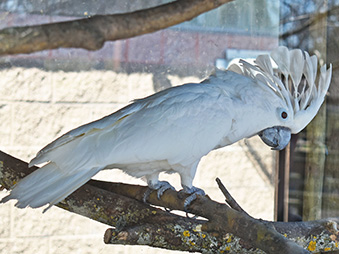
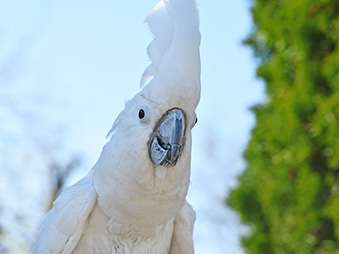
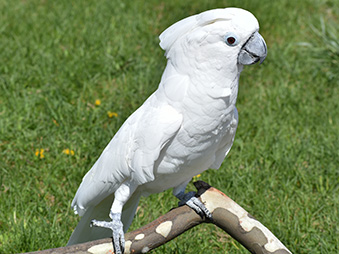
Meet the Umbrella Cockatoo
Intelligent, inquisitive, hilarious, and undeniably loud—the umbrella cockatoo is an endangered, wildly charismatic parrot found in Indonesia. Its name comes from the spectacular umbrella-shaped feathers perched on its head. Never subtle about their feelings; these birds use that crest to broadcast everything from excitement to alarm. What looks dramatic to us is simply everyday life for this expressive feathered friend.
What Makes Them Special?
Cockatoos are members of the parrot order Psittaciformes, a group known for strong curved beaks, zygodactyl feet, and voices you can hear long before you see them. But what sets cockatoos apart?
- Intelligence: They’re clever problem-solvers, capable of manipulating objects, figuring out puzzles, and even using tools (more on that later!).
- Color: Unlike many parrots, which sport brilliant blues and greens, most cockatoos are dressed in elegant black and white. Why so monochrome? Their feathers lack
- Dyck texture: the microscopic structure that reflects light to create the iridescent colors seen in other parrots.
Along with their amazing intelligence and striking monochromatic coloring, cockatoos are well adapted to their native environment. Two examples of adaptations:
- Powder Down Feathers: Instead of using oily secretions like ducks, cockatoos rely on fine, powdery down that spreads over their feathers. This natural “dusting” keeps them waterproof and clean.
- Zygodactyl Feet: With two toes forward and two backward, cockatoos have excellent grip and dexterity, perfect for climbing, exploring, and holding food almost like we do with our hands.
Intelligence & Tool Use
Cockatoos aren’t just smart—they’re crafty. Species like the Goffin’s cockatoo and the Palm cockatoo have been documented creating and using tools. A Goffin’s cockatoo may even craft a custom tool for nut-cracking and carry it for future use! With such busy brains, enrichment in human care isn’t optional—it’s essential to keep them engaged and prevent boredom.
Communication Masters
Umbrella cockatoos are social birds with big feelings and big ways of expressing them!
Vocalizations: In the wild, their calls can be heard across long distances. In human care, they may scream, chatter, or even mimic human speech.
Crest Feathers: Their iconic crest plays an important role in communication:
- Raised crest: excitement, alarm, curiosity
- Flattened crest: relaxed, calm, or quietly exploring.
Umbrella cockatoos form loose flocks of up to 15 birds but pair closely with a mate, usually staying side-by-side as they forage and move with the group.
A Day in the Life
Male and female umbrella cockatoos look almost identical, but there’s a subtle secret in their eyes: males have dark brown irises, while females have reddish ones. Along with their delightfully distinct personalities, this helps keepers tell individuals apart.
Umbrella cockatoos are long-lived: about 30 years in the wild and often over 40 in human care. They reach maturity around six years old and are monogamous, forming lifelong pair bonds. Mated pairs strengthen their relationship by grooming each other. This activity is especially helpful when new feathers emerge encased in protective keratin sheaths.
Breeding season typically coincides with times of plant abundance—December through March. Pairs sneak away from the flock to find tree cavities 16–98 feet above the ground. They usually lay 2–3 eggs, with both parents sharing incubation duty (though the female pulls more shifts). Even so, they typically raise just one chick, investing in the strongest hatchling.
Not a Pet
As endearing as they are, umbrella cockatoos do not make good pets. They require constant social interaction, a varied diet, complex enrichment, ample space, specialized vet care, and a tolerance for very loud vocalizations and heavy feather dust. Without proper care, cockatoos can become stressed, destructive, or unmanageable leading many to be surrendered.
Want to learn more about why domesticated animals are better suited for most homes? Explore the Not a Pet campaign!
Fact Sheet
Taxonomy
Genus: Cacatua | Species: alba
Kingdom: Animalia | Phylum: Chordata | Class: Aves | Order: Psittaciformes | Family: Cacatuidae | Genus: Cacatua |
Favorite Enrichment Type
Poppy loves paper bags and egg cartons, while Clyde prefers paper bags, baffle cages, and plastic pill bottles to shred.
Life Span
- In the Wild: 30 years
- In Human Care: 40+ years
Size
- 18 inches long
Diet
- In the Wild: Various nuts, seeds, flowers, fruits, and vegetation, as well as the occasional cricket and skink.
- At the Zoo: Harrison’s High Potency Coarse Nuggets, Zupreem FruitBlend, parrot mash (steamed vegetables, nuts, seeds, and banana), whole nuts, and Lafeber Classic Nutri Berries.
Geographic Range
North Moluccas of the Maluku province of Indonesia.
Habitat
Canopies of forests and open woodland, swamps, mangroves, and agricultural areas. Often found around the edges of clearings and rivers.
Fun Facts:
- Eye-spy the difference! Males have dark brown irises, while females have reddish ones—and typically smaller heads and beaks.
- Lifetime lovebirds: They are monogamous and keep the same partner for life.
- Cavity nesters: These birds’ nests in trees hollow up to 98 feet off the ground.
- Social—but selective: Typically found alone, in pairs, or in small groups of up to 15. They spend most of their time with their mates.
- Daytime adventurers: They are diurnal and stay in the same area unless they are searching for food.
- Habitats with benefits: Their old nests become homes for other animals, and they help disperse seeds.
- Crest talk: Their expressive head feathers communicate everything from excitement to curiosity.
- Powdered perfection: Their feathers create natural dust that helps waterproof them.
- Pests or protectors? In some regions, they damage maize crops—but they are also essential for seed dispersers.
- Endangered: Their biggest threat is the pet trade, along with habitat loss and hunting.
Status: Endangered
Breeding & Conservation
Umbrella cockatoos are endangered, and their populations continue to decline. The biggest threat? Illegal capture for the pet trade. In 1991, an alarming 17% of the wild population was removed from their native home. If illegal collection wasn’t enough, umbrella cockatoos are seen as pests in some regions, raiding maize crops or chewing through decks and siding with the unmatched enthusiasm of feathered demolition crews. Despite legal protections, habitat loss and hunting continue to put pressure on the species. With slow reproduction rates, they simply can’t keep up.
You can help cockatoos like Poppy and Clyde by supporting sustainable forestry and never purchasing wild-caught birds.
How to Find Us
Head on over to see Poppy or Clyde, located between the African Penguin and Scarlet Macaw habitats!