
Ambystoma tigrinum | Tiger salamander, mole salamander
Name: Alf
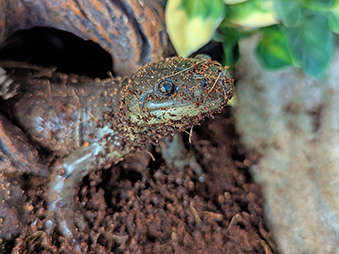
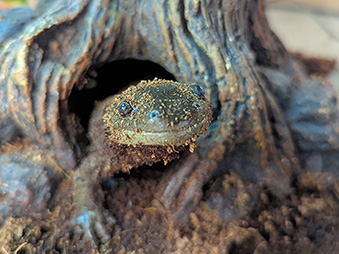
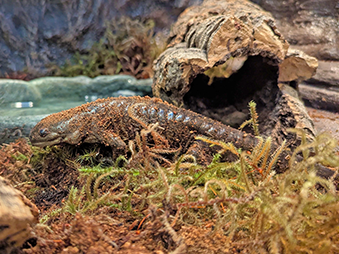
Meet Alf
Alf might not roar like a tiger, but with his bold stripes and stealthy habits, he’s a true ambassador for his kind. As one of the largest land-dwelling salamanders in North America, Alf is a fascinating example of how life thrives beneath the surface—literally!
A Master of Underground Living
Tiger Salamanders like Alf are well known for their burrowing behavior. They’re part of the mole salamander family, equipped with strong limbs and broad heads that make them expert diggers. In the wild, they spend most of their adult lives underground, only emerging at night or during rainstorms. At the zoo, Alf enjoys enrichment activities that mimic his natural habitat, such as soft soil to burrow in, leafy bedding, and hollow log hides. These features help keep him safe, stimulated, and stress-free.
Where Alf Comes From
Tiger Salamanders are widespread across North America. They inhabit a variety of environments including woodlands, grasslands, and marshes—from southern New York down to Florida along the Atlantic Coast, and across much of the central and western U.S., with some populations in southern Canada. They thrive in places with loose, moist soil and plenty of cover, which provide the perfect conditions for their underground lifestyle.
A Voracious Carnivore
Don’t let the cute face fool you, tiger salamanders are carnivorous hunters. In the wild, they feast on worms, insects, slugs, snails, and sometimes even small amphibians, reptiles, or young mice. At the Zoo, Alf dines on crickets that are dusted with calcium and vitamins, with an occasional treat of roaches or mealworms to keep his menu interesting and his body healthy.
Built for Two Worlds
As amphibians, tiger salamanders live part of their lives in water and part on land. They start life as aquatic larvae with external gills and then undergo metamorphosis, transforming into land-dwelling adults with lungs. Like all amphibians, they absorb oxygen, and toxins, through their skin, so a clean, damp environment is essential for their survival.
Living Long, Living Quietly
Though often hidden from sight, tiger salamanders can live impressively long lives. In the wild, they may live 12 to 16 years, but in human care, like at the Zoo, they can live up to 25 years or more. Alf is a testament to the resilience of his species when provided with the right environment, diet, and care.
Fact Sheet
Taxonomy
Genus: Ambystoma | Species: tigrinum |
Kingdom: Animalia | Phylum: Chordata | Class: Amphibia | Order: Urodela | Family: Ambystomatidae |
Favorite Enrichment Type
Places to burrow or hide!
Life Span
- In the Wild: 12 to 15 years
- In Human Care: Upwards of 25 years
Size
- Average: 7 to 8 inches
- Can reach up to 13 to 14 inches
Diet
- In the Wild: Worms, insects, slugs, and snails
- At the Zoo: Crickets with calcium and multi-vitamin supplements
Geographic Range
They Can be found along the Atlantic coast, stretching from south of New York down to Florida, as well as western and central inland United States and small parts of Canada.
Habitat
Woodlands, grasslands, and marshes.
Quick Facts: Alf the Tiger Salamander
- Special Features: Strong burrowers; metamorphose from aquatic larvae to land-dwellers
- Conservation Status: Least Concern (but declining in some areas)
- Why They Matter: Indicator species for ecosystem health
Status: Least Concern
Why Alf Matters
Even though tiger salamanders are currently listed as Least Concern, local populations are declining due to habitat loss, water pollution, and disease. Because they respire and drink through their skin, they are especially vulnerable to environmental changes. This sensitivity makes them an excellent indicator species, when amphibians like Alf are thriving, it’s a sign that their ecosystem is healthy too.
By learning about animals like Alf, we gain insight into the importance of preserving wetlands, reducing pollution, and protecting native wildlife. Every small step toward conservation helps safeguard the future of species like Alf and the delicate ecosystems they depend on.
How to Find Me
Come check out Alf in the Wild In Nature Building!