
Trachemys scripta elegans | Red-eared Slider, pond slider
Name: Tilly (Female)
A Familiar Face in the Pond
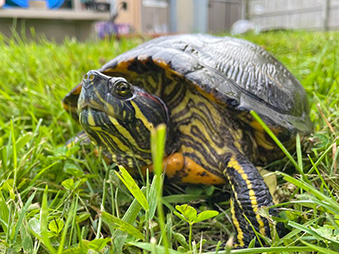
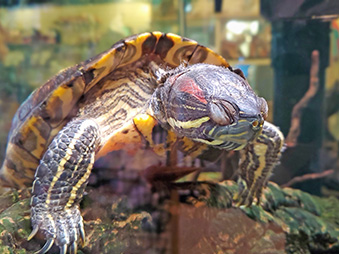
Say hello to Tilly, our red-eared slider! These turtles are famous all over the world—not just because they make popular pets, but because of the bright red or orange “ear” stripe that makes them look like tiny, masked bandits of the pond. That stripe also helps you spot them instantly (and tell them apart from lookalikes like the Western Painted Turtle).
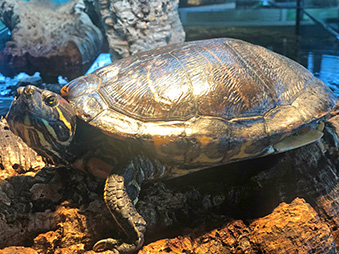
Red-eared sliders have a domed, bowl-shaped shell, green skin decorated with yellow racing stripes, and a yellow belly shell splashed with dark spots. Their shells are made up of little plates called scutes, each outlined like puzzle pieces. Fun fact: males are usually smaller, darker, and sport extra-long front claws.
Aquatic Life with a Sunny Twist
If you’ve ever walked past a pond and seen a whole row of turtles sunbathing on the same log, odds are you’ve spotted a slider sun-party. They love warming up in big groups, and when something startles them—plop!—they all slide into the water at once (that’s how they got their name).
Underwater, sliders move with the grace of tiny flippered ballerinas. During winter, though, they take it easy. Instead of fully hibernating, they snuggle into the muddy bottom of ponds and chill out—literally—until spring
Built for Life in the Water
Red-eared sliders come with an impressive set of features:
- Webbed feet for strong swimming.
- Eyes and nostrils on top of their head to peek out while staying mostly underwater.
- A tough shell on top and bottom for protection.
- Serrated jaws (no teeth!) to slice through plants and prey.
- Strong claws and legs for digging nests and climbing onto basking spots.
Like all reptiles, they’re ectothermic, which means that they rely on an external heat source to regulate their body temperature. A good sunbeam is basically their favorite spa treatment.
What’s for Dinner?
Sliders are culinary shapeshifters! When they’re young, they’re mostly carnivores—think insects, tadpoles, little fish. As they grow up, they develop special gut microbes that help them digest plants, turning them into omnivores with a “try anything once” attitude.
They are also opportunistic eaters, which is a polite way of saying:
If it fits in the mouth and can’t get away fast enough…it’s lunch.
Their adaptability is one reason they outcompete local species when they’re introduced to new ecosystems.
From Nest to Hatchling
Breeding season runs from April to late fall, and nesting happens mostly April–July. Females leave the water on a mission: find sunny, soft soil, dig a shallow nest, and lay 6–11 eggs (sometimes up to 20!).
The eggs are oval and leathery, tucked just a few inches underground—easy pickings for predators. Hatchlings sometimes emerge right after incubation, but others spend the winter in the nest. Overwintering babies can stay underground for up to 10 months, and they tend to hatch stronger.
One of nature’s coolest tricks: the nest temperature decides the babies’ sex.
- Cooler nests (22–27°C) → males
- Warmer nests → females
Sliders are also polygynandrous, which is a fancy word for “everyone courts everyone.” Courtship can involve chasing, biting, and the male’s signature move:
“titillation”—fluttering his long front claws right in the female’s face like a tiny, underwater jazz-hands performance.
Global Traveler, Local Invader
Although native to parts of the US and Mexico, red-eared sliders have been introduced around the world through the pet trade. But this global spread comes with problems: released pets can push native turtles aside, hog basking spots, and disrupt ecosystems. They’ve even made the list of the worlds 100 most invasive species.
Fact Sheet
Taxonomy
Genus: Trachemys | Species: scripta | Subspecies: elegans |
Sub species: Trachemys scripta elegans | Kingdom: Animalia | Phylum: Chordata | Class: Reptilia | Order: Testudines | Family: Emydidae |
Favorite Enrichment Type
Bamboo, floating boats/toys with food!
Life Span
- In the Wild: up to 30 years
- In Human Care: up to 40+ years
Diet
- In the Wild: As juveniles – mostly carnivorous, consuming insects, crayfish, spiders, tadpoles, fish, clams, freshwater sponges, small amphibians, and other reptiles. As an adult – they become omnivorous, consuming all of the same animals when they were young, but adding aquatic and terrestrial plant matter.
- At the Zoo: Mazuri® Fresh Water Turtle Diet, greens, fresh produce, and protein (fish, shrimp, clams, and insects).
Geographic Range
Native to North America from Alabama south to northern Mexico. Found in many locations around the world, and are considered invasive Michigan, along with other US states, Canada, and Mexico.
Habitat
Warm, slow-moving freshwater habitats like ponds, lakes, and marshes with soft bottoms, abundant vegetation, and plenty of basking spots such as logs or rocks.
Fun Facts
- A turtle’s sex is decided by temperature!
- They communicate with touch and vibration—turtle texting, in a way.
- Their shell is part of their skeleton and grows with them.
- They have no teeth, just strong, serrated jaws.
- Older males can turn almost entirely black—a very dramatic midlife makeover.
Status: Least Concern
Not a Pet
Even though sliders are easy to buy, they’re not easy to care for. A red-eared sliders can live over 40 years and require:
- Huge tanks, clean water, UV lighting, heat sources, and basking spots.
- Regular veterinary care.
- A varied, proper diet.
- A long-term financial commitment.
Unfortunately, many people buy them as tiny hatchlings and release them once they’re big, messy, or too much work—leading to ecological harm or the turtle’s death.
Curious why exotic animals like Tilly aren’t good pets? Check out theNot-a-Pet campaign for more info!
How to Find Me
Look for Tilly in the new Wild in Nature building, opening to the public during the 2026 season!