
Ovis aries | Domestic Sheep
Names:
- Shazam – Harlequin Sheep (male)
- Dolly and Quiet – Tunis Sheep (females)
- Aurora – Welsh Mountain Sheep (female)
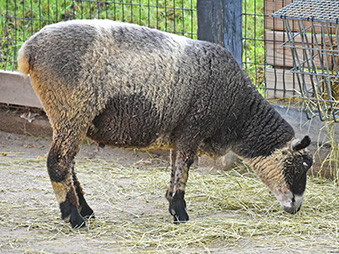
Harlequin Sheep
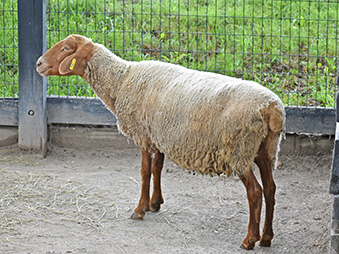
Tunis Sheep
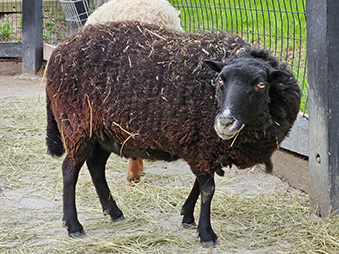
Black Welsh Mountain Sheep
Meet the Sheep of the Contact Yard
With their woolly coats, big personalities, and rich histories, the sheep of our Contact Yard represent three rare and remarkable heritage breeds: the Harlequin, Tunis, and Black Welsh Mountain Sheep. From Shazam’s superhero charm to Dolly and Quiet’s gentle presence and Aurora’s striking dark fleece, each sheep brings something unique to the barnyard.
What Is a Heritage Breed?
A heritage breed is a traditional livestock breed that existed long before modern industrial agriculture. These animals were carefully selected over generations for traits that helped them thrive in specific local environments.
Heritage breeds are known for:
- Strong maternal instincts
- Natural fertility and longevity
- Resilience to diseases and parasites
- Ability to forage and graze efficiently
- Capability to mate naturally
- Overall self-sufficiency
These breeds represent important agricultural history and genetic diversity. Official heritage status is determined through genetic testing by The Livestock Conservancy. While the USDA does not formally recognize “heritage” as a product label, many small farmers and breeders still use the term to highlight these traditional livestock lines.
Heritage breeds support conservation, sustainable farming, education, and land management through natural grazing practices. If you would like to learn more about Heritage breeds, check out The Livestock Conservancy for more information!
Harlequin Sheep: Small, Spotted, and Full of Charm
The Harlequin Sheep is a relatively new breed developed in Virginia by Kathleen Sterling of Black Sheep Farm East. Created using a mix of breeds—including Karakul, Tunis, Corriedale, Lincoln, Border Leicester, Romney, Montadale, and Southdown—Harlequins were designed to be colorful, compact, and easy to handle. They are naturally polled (hornless), which makes them safer for flock mates and handlers.
They made their public debut at the Great State Fair of Texas in 2017 and have been gaining popularity ever since.
Harlequins are treasured for their soft, medium-length wool, whimsical spots, nurturing temperament, and even their occasional blue eyes.
Our Harlequin, Shazam, is especially charming—he’s small, friendly, and has heterochromia: one blue eye and one brown. His playful personality and super-powered good looks make him a guest favorite.
Tunis Sheep: A Historic Breed with American Roots
Dolly and Quiet belong to the Tunis Sheep, a heritage breed with one of the oldest agricultural legacies in the United States. Their ancestors were gifted to George Washington by the Bey of Tunis in the 1700s. These animals were later shared with Judge Richard Peters, who helped spread the breed throughout the young nation.
Tunis Sheep are considered “fat-tailed” or “Barbary” sheep due to their broad, docked tails. They were widely admired in the upper South and mid-Atlantic regions until the Civil War, when the breed was nearly wiped out. Afterward, they became common in New England and the Great Lakes region. Today, Tunis Sheep are valued for their ability to thrive in tough environments while still providing wool, meat, and even milk for cheese.
Black Welsh Mountain Sheep: Small, Sturdy, and Striking
Aurora represents the bold and beautiful Black Welsh Mountain Sheep, a heritage breed famous for being the only completely black sheep breed in Britain. Selected originally for both their dark color and fine wool texture, these sheep were officially recognized in 1922, when the Black Welsh Mountain Sheep Society was formed.
The Welsh name for the breed is Defaid Myndd Duon.
They were first imported to North America in 1972 by Thomas Wyman of Easton, Maryland, with a U.S. breed registry established in 1990 based on British standards.
Black Welsh Mountain Sheep are prized for:
- Their natural, jet-black wool.
- Their flavorful, premium meat.
- Their resilience and disease resistance.
- Their ability to thrive in rugged terrain.
Aurora’s deep black coat and confident energy make her a striking standout in our flock.
A Long Partnership with People
Domestic sheep (Ovis aries) have lived alongside humans for thousands of years, originally domesticated in the Middle East and Central Asia. Sheep have provided wool, meat, milk, lanolin, and companionship throughout history.
Each breed at our zoo carries a unique heritage story:
- Harlequin Sheep: A modern American breed developed for colorful fleece and easy handling.
- Tunis Sheep: The oldest livestock breed developed in the U.S., historically important and highly adaptable.
- Black Welsh Mountain Sheep: A Welsh breed selected for deep black wool and remarkable resilience.
Shazam, Dolly, Quiet, and Aurora remind us that every sheep has a story worth hearing—and a fleece worth admiring.
Fact Sheet
Taxonomy
Genus: Ovis | Species: aries
Kingdom: Animalia | Phylum: Chordata | Class: Mammalia | Order: Artiodactyla | Family: Bovidae |
Favorite Enrichment Type
Treat dispensing toys filled with pelleted hay!
Life Span
- In Human Care: Average of 10 to 12 years; 23 years maximum
Diet
- At the Zoo: Orchard grass or timothy hay and pellets, mineral/salt supplements
Geographic Range
Domestic
Habitat
Ranches, farms, foothills, plains, and pastures.
Fun Facts
- Intact males are rams, castrated males are wethers, females are ewes, and young are lambs.
- A group of sheep is called a flock.
- Popular sheep products include wool, meat, and lanolin—an oil extracted from wool and used in moisturizers to protect skin and hair.
- Sheep have strong herding instincts; individuals can become stressed when separated from their flock.
- Sheep are ruminants, meaning they chew cud and use a four-chambered stomach—the rumen, reticulum, omasum, and abomasum—to digest fibrous plants efficiently.
Status: Not Evaluated/Domestic
How to Find Us
Come see Shazam, Dolly, Quiet, and Aurora down at the Contact Yard, between the Playground and Rainforest building.