
Sus scrofa domesticus | Domestic Pig, Juliana Pig, Miniature Painted Pig
Name: Charlotte (female)
Meet Charlotte the Domestic Pig
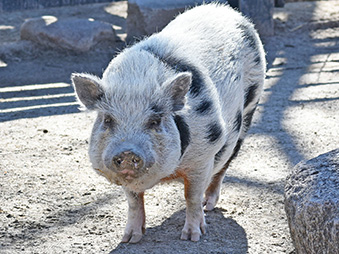
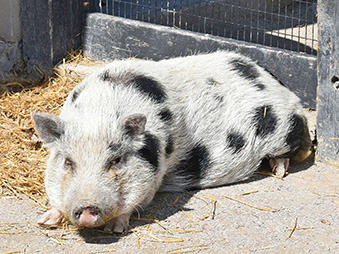
With her spotted coat, curious snout, and love for shredding paper into the perfect bed, Charlotte the Domestic Pig brings charm, intelligence, and a whole lot of sass to the barnyard. She’s friendly, expressive, and full of opinions—and she’s never shy about sharing them through grunts, squeals, or enthusiastic tail wags.
A Colorful and Curious Companion
Juliana pigs are a small domestic breed known for their distinctive spotted coats and compact, athletic bodies. Developed in the Netherlands, Julianas are leaner and more agile than their pot-bellied cousins. Their bodies are longer than they are tall, with strong legs and sensitive snouts perfectly built for exploring their world.
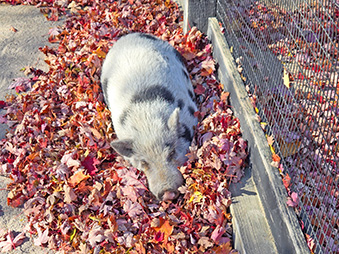
Charlotte is a picture-perfect Juliana: inquisitive, vocal, and busy. She loves rearranging her enrichment items, rooting through straw to build her dream nest, and collecting any soft paper products she can find for cozy sleeping material.
Domestic pigs come in a range of base colors—silver, white, red, rust, cream, or black—but they’re always spotted. Their markings change slightly with the seasons, giving each pig a shifting, one-of-a-kind pattern. Charlotte’s upright ears, long snout, and muscular frame make her both adorable and built for adventure.
Life at the Zoo
Charlotte enjoys a healthy, balanced diet of Mazuri® Mini Pig pellets, fresh vegetables, leafy greens, fruits, and orchard grass hay. As a highly intelligent pig, she thrives on activities that let her forage, explore, and manipulate objects.
You’ll find her between the playground and the Contact Yard—usually wagging her tail, rearranging her bedding, or greeting guests with her signature grunts. And if you spot a beautifully constructed paper nest nearby… you’ll know exactly who made it.
A Heritage of Intelligence and Adaptability
Domestic pigs (Sus scrofa domesticus) were first domesticated more than 9,000 years ago in regions of Western Asia and China, descending from the wild boar. Today, pigs are celebrated for their problem-solving abilities and emotional intelligence—often compared to dogs or even primates.
They form strong social bonds, communicate clearly with one another, and love to root, explore, and build nests. Pigs also come equipped with impressive adaptations:
- Omnivores at heart: Pigs eat both plants and animals.
- Hooves for the job: They have four toes on each foot—one large weight-bearing toe and three smaller ones for balance on soft soil.
- A super snout: Their round, cartilaginous nose disk gives structure and strength for rooting through dirt.
- The nose knows: Their sense of smell is so sharp they can detect food 7 miles away and 25 feet underground! In some areas, pigs are even trained to find truffles or sniff out landmines.
- Iron hunters: Rooting also helps pigs ingest essential minerals, especially iron. Piglets raised indoors often need iron supplements to prevent anemia.
- Cooling off: While pigs can sweat, they don’t have enough working sweat glands to cool themselves effectively—so rooting and mud-bathing help them regulate temperature.
- A royal namesake: Juliana pigs were developed in the Netherlands in the late 20th century and named after Queen Juliana, who was beloved for her affection for animals.
Not bad for an animal that also enjoys a good mud bath
Fact Sheet
Taxonomy
Genus: Sus | Species: scrofa | Subspecies: domesticus |
Sub species: domesticus | Kingdom: Animalia | Phylum: Chordata | Class: Mammalia | Order: Artidactyla | Family: Suidae |
Favorite Enrichment Type
Paper products that she can drag into her bed!
Life Span
- In Human Care: average of 15 to 20 years; 27 years maximum.
Diet
- At the Zoo: Mazuri® Mini Pig Adult diet, greens, vegetables, fruits, and orchard grass hay.
Geographic Range
Domestic.
Habitat
As domestic animals, they are most commonly found living alongside humans in farms or as pets in homes but can survive in a multitude of environments with access to food and clean water.
Fun Facts About Charlotte (and Pigs!)
- Pigs are incredibly intelligent—they can learn names, commands, routines, and even solve puzzles.
- Rolling in mud isn’t just fun; it keeps pigs cool, protects their skin from the sun, and helps repel pests.
- Pig tails can speak volumes! A gentle wag means calm contentment, while a tight curl or spin signals excitement.
- Charlotte’s enthusiastic tail wags and happy grunts let her caretakers know exactly what kind of day she’s having.
Status: Not evaluated/Domestic
Pigs as Pets
Pigs are incredibly intelligent, social, and full of personality—which is why many people consider bringing one into their home. But despite their charm, pigs are far from low-maintenance pets.
Because they’re so smart, pigs need constant mental and physical stimulation. Without plenty of enrichment, training, and exercise, they can easily become bored—and a bored pig can quickly become a destructive pig. Rooting, exploring, and rearranging their environment aren’t bad behaviors to them; they’re natural instincts.
Pigs also require significant time, space, and financial commitment. Specialized diets, regular veterinary care, proper housing, and daily activities all add up. And before anyone considers adopting a pig, it’s essential to check local zoning laws, as many counties and cities do not allow pigs to be kept as household pets.
With the right dedication, resources, and knowledge, pigs can be wonderful companions—but they’re definitely not the right fit for every home.
How to Find Me
Head on down to the barnyard to meet Charlotte, our Juliana Pig, located between the playground and the Contact Yard!