
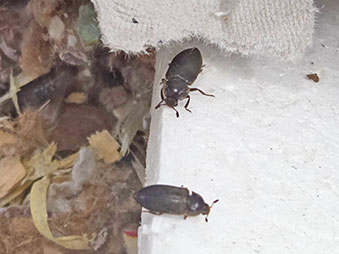
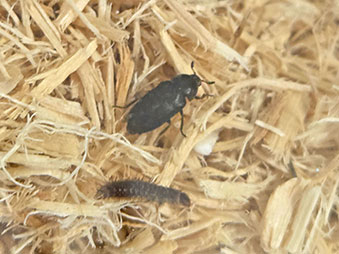
Dermestes ater | Dermestid Beetle/Black Larder Beetle
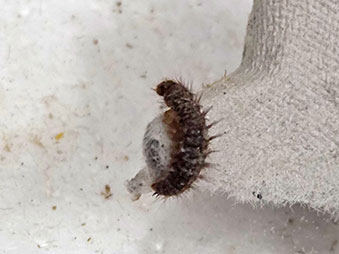
Larva
Meet the Black Larder Beetle
The black larder beetle—also known as a dermestid beetle—is a tiny but mighty insect found all around the world. Even though they grow to only about one-third of an inch long, they play a big role in nature. These beetles are part of the planet’s clean-up crew, helping recycle nutrients from dead plants and animals back into the soil.
Amazing Life Cycle
Dermestid beetles go through complete metamorphosis, meaning they change forms four times as they grow:
- Egg
- Larva
- Pupa
- Adult
The larval stage is when they do most of their eating. When they’re ready to become adults, the larvae dig into a safe material—like wood, cork, plaster, Styrofoam, bone, or even thin metal—to create a tiny chamber. Inside this protective space, they pupate for about two weeks before emerging as adults.
From egg to the end of their lives, most dermestid beetles live for about six months.
Nature’s Expert Cleaners
Dermestid beetles can live almost anywhere there’s food available. You might find them:
- Under tree bark or in animal nests
- Inside granaries or warehouses
- In houses or barns
- On animal remains outdoors
These beetles are detritivores, meaning they break down leftover organic matter and return vital nutrients to the environment.
Because they thrive in so many places, they can be extremely helpful or surprisingly harmful. In nature or in controlled indoor environments, they’re incredibly useful. Many museums, universities, and taxidermists affectionately call them “museum volunteers” because their larvae are fantastic at skeletonization—cleaning every bit of skin, hair, feather, and tissue from bones. Their work helps prepare skeletons for research, study, and display.
However, if even a few adults escape their enclosure, they can spread quickly. For museums and scientific collections, uncontrolled infestation can be disastrous. Removing food sources, cleaning thoroughly, and vacuuming can help, but large infestations can be difficult and expensive to eliminate.
Why They Matter
Dermestid beetles play a crucial role as decomposers in natural ecosystems. By breaking down dead animals and other organic materials, they prevent waste from accumulating and help return essential nutrients to the soil, supporting healthy plant growth, and ultimately healthy ecosystems.
Without detritivores like dermestids, decomposition would slow dramatically—or even stop—triggering a cascade of harmful effects:
- Organic waste such as leaf litter, feces, and carcasses would build up, increasing the presence of harmful bacteria and disease.
- Nutrients trapped in dead material would no longer cycle back into the soil.
- With fewer nutrients available, plants would struggle to grow.
- Reduced plant growth would weaken the foundation of the food web, potentially leading to ecosystem collapse from the bottom up.
Next time you take a hike, or enjoy a beautifully biodiverse habitat, take a second to think about the quiet, yet essential work being done by many different animals beneath your feet!
Fact Sheet
Taxonomy
Genus: Dermestes | Species: ater |
Kingdom: Animalia | Phylum: Arthropoda | Class: Insecta | Order: Coleoptera | Family: Dermestidae |
Life Span
- In the Wild: 6 months
- In Human Care: 6 months
Size
- Average: 0.33 inches
Diet
- In the Wild: Detritivore – raw hides, animal skin, carrion, bones, wool and fibers alike that have sweat or blood on them, feathers, stored tobacco, cured and dried meat, stuffed animals, deceased insects, abandoned bird nests, inactive beehives, and rat or mouse poison baits.
- At the Zoo: N/A
Geographic Range
Found in most places around the world.
Habitat
Found in most outdoor habitats and indoor structures where their food source can be found. Examples include, but are not limited to granaries, warehouses, and homes, as well as animal nests, under bark, and decomposing animal carcasses.
Fun Facts
- A colony of dermestid beetles can clean a small animal skeleton in just a few days.
- Even though they’re tiny, their larvae can chew through surprisingly tough materials when making a safe pupation chamber.
- Museums sometimes keep entire rooms dedicated to beetle colonies—complete with temperature controls and escape-proof walls!
- Dermestid beetles have been used by scientists for more than a century to help prepare specimens.
Status: Not Evaluated
Dermestid beetles aren’t considered threatened. Many species are widespread and common across the globe.
How to Find Us
Head on over to our new Wild in Nature building, located between the Barnyard and Train Whistle Cafe to see these insects at work!