
Archispirostreptus gigas | African Giant Millipede
The Rainforest’s Gentle Recycler
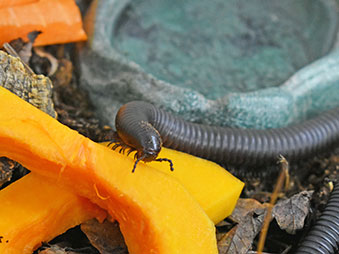
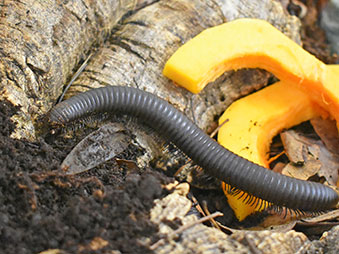
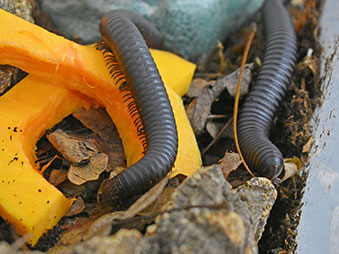
Deep in the warm, leafy rainforests of Africa, a slow-moving creature glides across the forest floor. It’s long, shiny, and covered in dozens of segments that ripple like a tiny wave when it walks. Say hello to the African giant millipede, one of the largest millipedes on Earth, stretching up to 12–15 inches long and nearly 2.5 inches around!
Life in the Leaf Litter
African giant millipedes spend their nights exploring the forest floor, searching for their favorite snacks fallen leaves, rotten wood, decaying plants, and sometimes even their own shed skins (which are full of valuable nutrients like calcium). As peaceful decomposers, they help turn dead plant material into rich soil. Without them, the rainforest wouldn’t have the healthy soil it needs to grow new life.
Legs for Days…But Not a Thousand
Despite their name—millipede meaning “thousand feet”—African giants usually have 300–400 legs. Each time they molt, they add new segments, and each segment adds two pairs of legs (except the first few, which have fewer). Fully grown adults usually have 54–71 segments, creating a smooth, wave-like motion as they walk.
Sensing the World
Millipedes don’t see very well. Their eyes are made of simple ocelli, which detect light rather than detailed shapes. To “feel” the world, they use:
- Antennae
- Feet
- Special body sensors, called chemoreceptors, which help them smell and taste their environment.
Built-In Body Armor
A giant millipede’s rounded, shiny exoskeleton is tough enough to help it burrow and move through soil. They are the only land arthropods that store large amounts of calcium in their exoskeleton, making their armor extra sturdy. This helps them push through soil instead of eating through it like earthworms do.
If threatened, they curl into a tight ball to protect their soft underside. They can also release a foul-smelling defensive chemical from special repugnatory glands along their body. This liquid tastes and smells awful to predators! Birds, frogs, lizards, and mammals quickly learn to avoid it!
Life Cycle & Growing Up
Mating usually happens in spring and autumn, when conditions are moist. Males are generally smaller and darker, and they have special structures called gonopods on their seventh segment to transfer a spermatophore to the female.
Females lay hundreds of eggs, each sealed in a protective capsule called an ootheca, buried safely underground. After 6–8 weeks, tiny pale babies hatch with only a few segments and legs. They grow—and molt—for about two years before reaching adulthood.
African giant millipedes can live 5–7 years in the wild, and up to 10 years in human care.
Millipede vs. Centipede: Cousins with Very Different Lives
At first glance, it’s easy to confuse millipedes and centipedes. Both are long, many-segmented arthropods scurrying through the leaf litter. Take a closer look, and their differences tell two very different stories about two very different animals.
What they have in common:
- Arthropod yes, insect no! They are arthropods, but do not fit the definition of insects, which includes three defined body segments with six legs.
- Family ties: They are like cousins and are often grouped together due to their similar body plan that includes many segments.
- Feeling their way: They do not rely on sight to get around in their environment, due to their poor (or non-existent) sight.
How they differ:
- Who bites? Centipedes are venomous and carnivores while millipedes are detritivores and non-venomous.
- Similar, but different: Millipedes have a rounded body, with their legs situated under them while centipedes have a flatter body with their legs positioned to the side.
- How many legs? Centipedes have one pair of legs per body segment, while millipedes have two.
Fun Facts
- They don’t bite! Millipedes are gentle and not venomous, unlike centipedes, which have venomous fangs and can move fast to catch prey.
- Calcium champions! They are the only land arthropods with exoskeletons strengthened by lots of calcium, helping them burrow without collapsing.
- More legs than you think: Adults have anywhere from 300 to 400 legs, not a thousand, but still enough to make shoes very expensive!
- They smell their world: Using chemoreceptors, they “taste” chemicals in the air and on the ground to find food and stay safe.
- Special eggs: Millipede eggs are protected by tiny capsules called oothecae that help prevent water loss.
- Stinky defense: The defensive chemical they produce includes two benzoquinones, which are compounds that not only taste terrible but may also have antibacterial, antifungal, and parasite-fighting properties.
- Segments tell a story: Scientists often identify millipede species by the shape of the male’s gonopods, which act like species-specific tools during mating.
- Moisture matters: Millipedes are prone to drying out. They depend on damp environments because their bodies lose water easily through respiration and open spiracles.
Fact Sheet
Taxonomy
Genus: Archispirostreptus | Species: gigas
Kingdom: Animalia | Phylum: Arthropoda | Class: Diplopoda | Order: Spirostreptida | Family: Spirostreptidae |
Size
- Length: 12 to 15 inches
- Circumference: 2.5 inches around
- Weight: 0.4 to 0.5 pounds
Life Span
- In the Wild: 5 to 7 years
- In Human Care: Up to 10 years
Diet
- In the Wild: Detritivore – feed on dead and decaying organic matter
- At the Zoo: Leaf litter, fruits, and vegetables
Geographic Range
Found in eastern Africa in countries like Kenya, Mozambique, South Africa, and Tanzania.
Habitat
The rainforest floor where it’s warm, humid, and dark.
Status: Least Concern
Conservation: Important Members of the Ecosystem
While the African giant millipede’s populations are currently stable, they depend on healthy rainforest habitats for their survival. They are not only considered keystone species, but bioindicators, meaning their presence and health can show how clean or polluted the soil is. They are the third most important detritivores (decomposers of dead material), right behind earthworms and termites.
They’re found on every continent except Antarctica, proving they’re pretty good at making themselves at home in the soil.
By protecting forests from habitat destruction and pollution, we ensure that these important decomposers continue providing critical balance from the bottom up.
How to Find Me
Come and check out our Giant African Millipedes in our new Wild in Nature Building!